Get FREE shipping on all orders!
Fast FREE shipping on all orders!
Pioneer DJ controllers feature all the essentials: a mixer, jog wheels, touch pads, and a host of other elements you didn't know you needed to extract every ounce of potential from your tracks. Whether you prefer battle-style or mix-ready, there's a Pioneer DJ Controller to suit any style or budget. Finsh out your Pioneer DJ rig with PA Speakers, Headphones, and Accessories to upgrade your set.
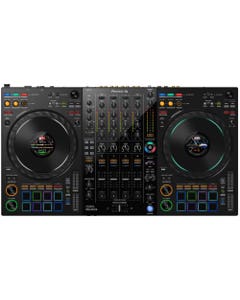
12 Payments of $144.08
h m s
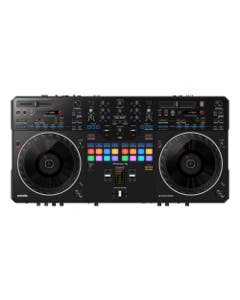
12 Payments of $99.08
h m s
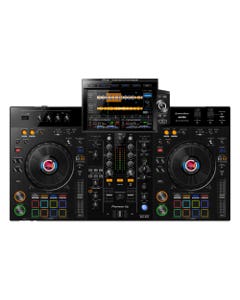
12 Payments of $189.08
h m s
12 Payments of $63.33
h m s
12 Payments of $94.08
12 Payments of $179.92
h m s

8 Payments of $37.38
h m s

12 Payments of $216.58
h m s
8 Payments of $43.63
h m s
12 Payments of $116.58
h m s
A Pioneer DJ controller sits at the heart of most modern DJ setups, but the term covers a lot more ground than you might think. Before adding one to your cart, there are two decisions worth making first. The first is whether you want a laptop-based DDJ controller or a standalone system like the XDJ or OPUS QUAD that skips the laptop entirely. The second, if you're going the DDJ route, is choosing between the DDJ-FLX series and the DDJ-REV series, two lineups built around different software habits and different playing styles.
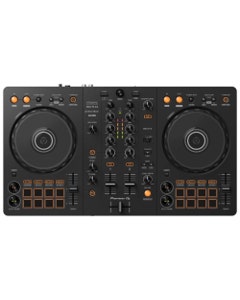
The DDJ-FLX line is built for DJs who want flexibility in their software. Both the beginner-friendly DDJ-FLX4 and the professional DDJ-FLX10 run Rekordbox and Serato DJ, so you're not locked into one ecosystem before you've even picked a genre. That makes the FLX series a comfortable fit for anyone who already has playlists built in one program, or who simply likes having options.
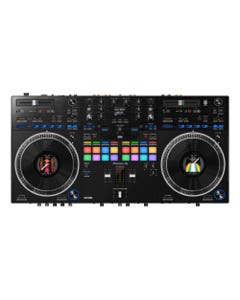
The DDJ-REV line takes a different approach. It's styled after a turntable-and-mixer setup, with a layout that leans into scratching and battle-style mixing rather than a typical club-controller feel. Most of the REV lineup runs on Serato DJ only, which keeps things simple if Serato is already your software of choice. The one exception is the DDJ-REV5, which also supports Rekordbox, giving it a foot in both camps.
So the real question isn't which controller is "better." It's which habits and software you already have, and whether you want a club-style layout or a battle-style one under your hands.
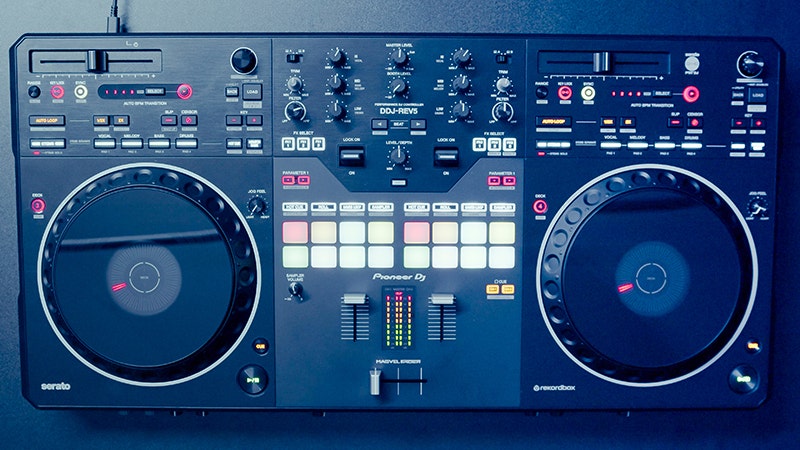
If software flexibility is a priority, the DDJ-FLX4 and DDJ-FLX10 support both Rekordbox and Serato DJ, no need to swap hardware when you swap software. The DDJ-REV1 and DDJ-REV7 are the better pick if you're already settled in Serato DJ and want a battle-style layout built around a turntable-and-mixer setup, since both are Serato-only. The DDJ-REV5 splits the difference: it keeps the REV series' battle-style layout but adds Rekordbox support, so scratch-focused DJs don't have to sacrifice software options.
Channel count is really a question about how big your sets get. The DDJ-REV1 and DDJ-FLX4 are 2-channel entry controllers, built for mixing two tracks at a time, which covers most beginner and hobbyist setups.
The DDJ-REV5 and DDJ-FLX10 step up to 4-channel, club-standard controllers with phono-capable inputs, letting you run a full four-deck set or bring in outside turntables. Choose 2-channel if you're still learning the fundamentals of a transition. Choose 4-channel if you're already building layered sets or performing in venues that expect a club-standard rig.
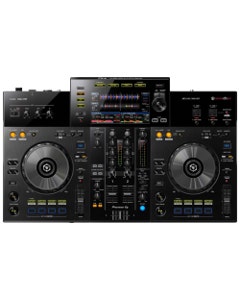
Every DDJ controller on this list requires a laptop to function. If that doesn't work for you, Pioneer's standalone systems, the XDJ-RX3, XDJ-RR, and OPUS-QUAD, are built to run without one. These systems load tracks straight from a USB drive or SD card, which makes them a practical choice for DJs who want to travel light or who'd rather not manage a laptop during a set. Choose a DDJ controller if you're comfortable performing with a laptop and want the flexibility of Rekordbox or Serato. Choose a standalone system if you want to walk into a gig with a drive in your pocket and nothing else to plug in.
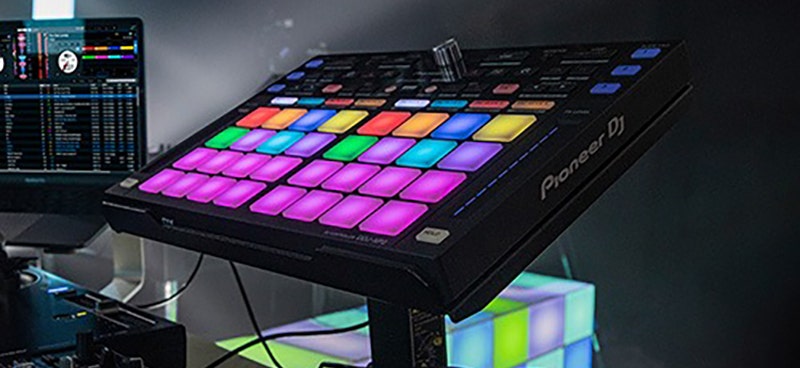
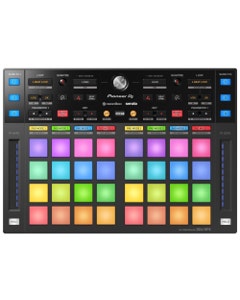
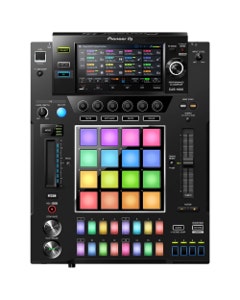
American Musical Supply carries a full Pioneer DJ controller and workstation lineup, and offers 0% payment plan financing on eligible orders. Two of those ten models are worth calling out separately, since they're not alternatives to the mixing controllers above. The DDJ-XP2 is an add-on pad controller, and the DJS-1000 is a performance sampler. Both are designed to complement a DJ setup, not replace any of the mixing duties.
Pairing a controller with the right mixer is key when building a multi-deck setup. Pioneer's DJ mixers cover everything from compact battle-style units to full multi-channel boards. If your sets mix vinyl or CDs with digital files, Pioneer's players and turntables let you work across formats without sacrificing either. For a broader look at everything Pioneer DJ makes, from headphones to studio monitors, the Pioneer DJ brand page is the where to see the full catalog.
Pioneer DJ controllers span a wide price range, from entry-level 2-channel models like the DDJ-REV1 and DDJ-FLX4, to 4-channel club-standard controllers like the DDJ-FLX10, up to standalone systems like the OPUS QUAD. You can find an entry-level Pioneer DJ controller for around $300 all the way up to professional standalone systems for $3,500.
Setup starts with connecting the controller to your laptop or, for standalone systems, loading music from a USB drive or SD card. From there, you'll open your DJ software, such as Rekordbox or Serato DJ, and the controller should be recognized automatically. Most models are class-compliant, meaning no extra driver installation is required on modern operating systems.
Pioneer's controller lineup includes the DDJ-FLX series (FLX4 and FLX10), the DDJ-REV series (REV1, REV5, and REV7), the standalone XDJ-RX3 and XDJ-RR, and the OPUS QUAD. The DDJ-XP2 and DJS-1000 round out the lineup as add-on gear rather than standalone mixing controllers.
Software compatibility depends on the model. The DDJ-FLX4 and DDJ-FLX10 run both Rekordbox and Serato DJ. The DDJ-REV1 and DDJ-REV7 run Serato DJ only. The DDJ-REV5 supports both Rekordbox and Serato DJ Pro. Standalone systems like the XDJ-RX3 and OPUS QUAD run Pioneer's own onboard software without needing a laptop.
Most Pioneer DJ controllers include jog wheels, performance pads, channel faders, and a built-in mixer section. The DDJ-FLX series uses a layout aimed at typical club-style mixing, while the DDJ-REV series is modeled after a turntable-and-mixer setup, which suits DJs focused on scratching and battle-style performance.
A 2-channel controller is enough for mixing two tracks at a time and works well for beginners. A 4-channel controller supports four-deck mixing and phono-capable inputs, making it the better fit for DJs performing in club settings or running more complex sets.