
Related Orchestra Acoustic Guitar Content

What Is a Dreadnought Guitar?

The Best Acoustic Guitar Strings for Every Player

7 Most Common Acoustic Guitar Body Styles
Featured Brands


Get FREE shipping on all orders!
Fast FREE shipping on all orders!


12 Payments of $250.00
plus $1,599.99 down
h m s
6 Payments of $45.00
h m s

12 Payments of $250.00
plus $1,599.99 down
h m s

12 Payments of $166.67
h m s
12 Payments of $70.83
h m s

12 Payments of $79.17
h m s

12 Payments of $83.33

12 Payments of $100.00
h m s
An orchestra model (OM) acoustic guitar is a mid-size, long-scale body shape known for its balanced tone, articulate response, and fingerstyle-friendly playability. Martin originated the design in the 1930s. It sits between the compact 000 and the bass-heavy dreadnought, making it a strong choice for fingerpickers and singer-songwriters.
The orchestra guitar has a way of winning over players who have spent years chasing a tone they couldn’t quite name. Comfortable, balanced, and surprisingly versatile, the OM shape suits fingerstyle players and singer-songwriters who want clarity across all six strings without the booming low end that you get from a dreadnought.
OM stands for orchestra model, a name Martin introduced in 1929 when the company developed the body shape for plectrum-style orchestral players. The design stuck around long after those players moved on because it turned out to be an excellent all-around acoustic guitar format.
The body is mid-sized, similar in width to a 000 but typically paired with a longer scale length. That combination produces a sound that’s articulate, even-tempered, and responsive at low volumes. Notes ring out clearly and evenly across the frequency range — exactly what you want when your picking hand is doing most of the heavy lifting.
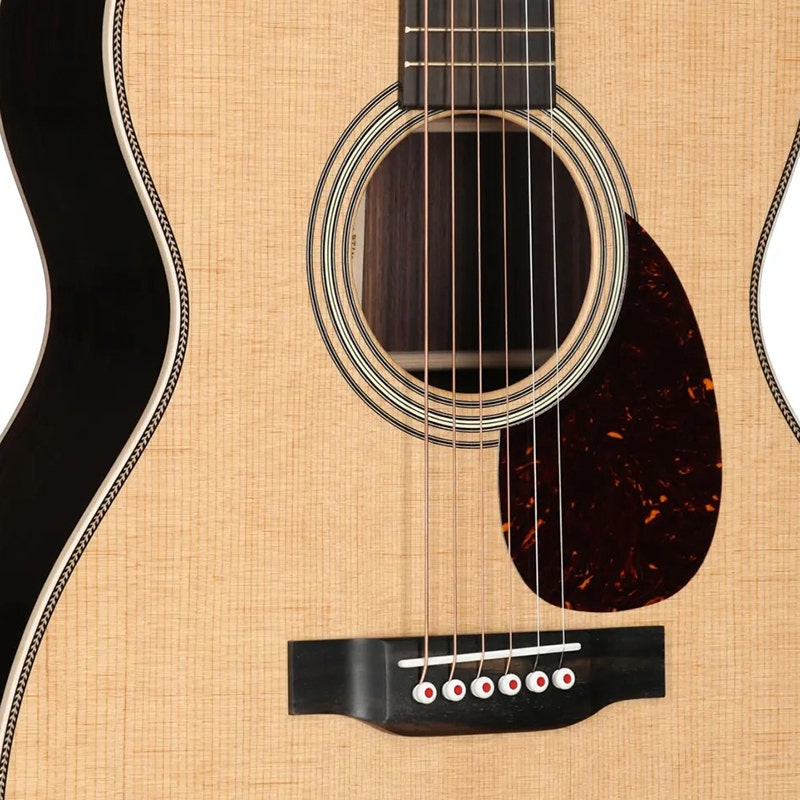
The OM and the 000 share the same body dimensions. The practical difference comes down to scale length. A standard OM runs a 25.4-inch scale, while the 000 typically runs 24.9 inches. That extra half-inch of scale translates to slightly higher string tension, a crisper attack, and a bit more headroom when you dig in. For fingerstyle players, that added snap can be the difference between a note that speaks and one that gets lost in the rest.
The dreadnought is a different animal. Its larger body moves more air, producing stronger bass response and greater volume — which is exactly why strummers and flatpickers tend to reach for one. Playing with a pick in a band? The dreadnought probably has your back. But if you fingerpick, record at home, or play in smaller rooms where clarity matters more, the OM is tough to beat.
A longer scale length means higher string tension at the same tuning, which changes how the guitar feels under your fingers. On an OM, that translates to a firmer, more responsive feel compared to a short-scale 000. Notes articulate more cleanly, and the attack has a slight snap that rewards precise technique. Players with smaller hands sometimes find the longer reach between frets noticeable, so trying before buying is always worth it when you can.
Tonewoods shape the character of every acoustic guitar, and the OM body size lets those materials speak clearly. Spruce tops, the most common choice, deliver brightness and dynamic range that opens up as the guitar ages. Mahogany tops and backs lean warmer and more focused, which can flatter fingerpicking styles where midrange definition matters. Cedar tops respond quickly at low attack, making them popular with players who use a light touch. These are general tendencies, not rules, and the construction quality of the guitar matters at least as much as the wood choice.
The OM's even response across bass, mid, and treble frequencies makes it a natural fit for fingerpicking. When your thumb is handling bass notes while your fingers work the melody, you need each register to hold its own without overwhelming the others. The orchestra guitar does that well. It also pairs naturally with vocals, because its midrange sits in a range that complements rather than competes with the human voice.
AMS carries a solid selection of orchestra guitars, with most of the catalog coming from Martin — which makes sense, since they invented the shape. Alvarez and Fender also have some OM models that you can check out as well.
Ready to get your dream OM acoustic? AMS offers free shipping and flexible 0% interest payment plans through your existing credit card, making a higher-end Martin more attainable than you might expect. And if you have questions, AMS customer service is staffed by working musicians who actually know their way around a fretboard.
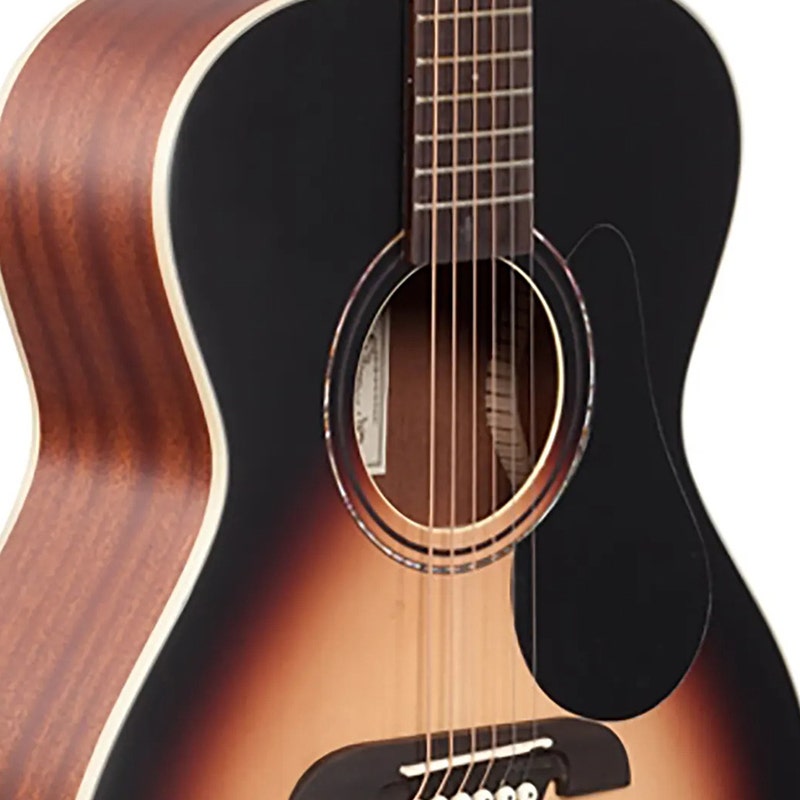
Not sold on the OM? Here's a few related shapes worth exploring:
An orchestra model guitar is a mid-sized acoustic with a balanced tone and long scale length, originally designed by Martin in 1929. It's well-suited to fingerstyle playing and recording, where clarity and even frequency response take priority over volume.
An OM guitar uses the same body dimensions as a Martin 000, which puts it in the mid-size range, smaller than a dreadnought but larger than a parlor guitar. The body width is typically around 15 inches at its widest point.
The main difference is scale length. An OM typically has a 25.4-inch scale compared to the 000's 24.9 inches. The bodies are the same size, but the longer OM scale adds string tension, which produces a crisper attack and slightly more headroom under your picking hand.
Choose an orchestra guitar if you fingerpick, record at home, or want a comfortable guitar that sits well in a mix. Choose a dreadnought if you strum hard, flatpick, or need more volume and bass when playing with other instruments. Both are excellent, just for different players.
Yes, Martin not only makes OM acoustic guitars, they invented the design in 1929. The company continues to produce orchestra model guitars across several series, and Martin guitars make up the majority of the OM selection at American Musical Supply.