Get FREE shipping on all orders!
Fast FREE shipping on all orders!
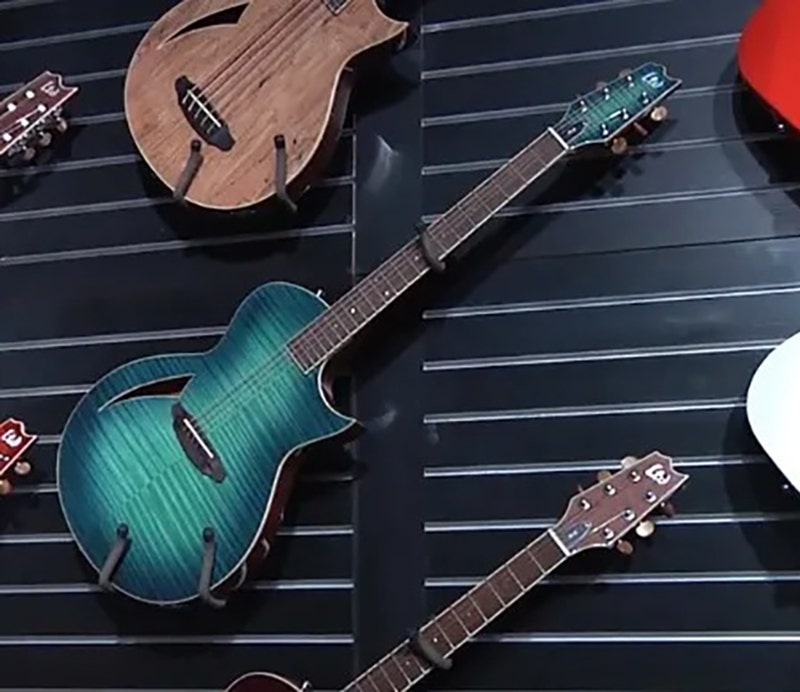
Want an acoustic with the feel of an electric? A thin body (also called thinline) acoustic might be right for you. They're much smaller and thinner than big-bodied dreadnoughts, jumbos, and grand auditoriums, great for travel, comfort, and smaller frames. Check out thin-body acoustics from top brands like Ibanez, ESP, and Fender.

8 Payments of $47.50
h m s
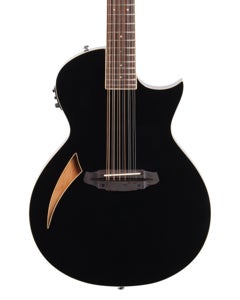
12 Payments of $50.00
h m s
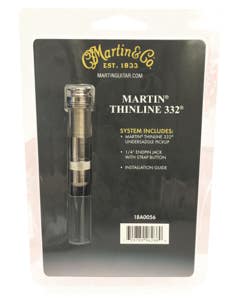
4 Payments of $23.00
h m s

6 Payments of $31.67
h m s
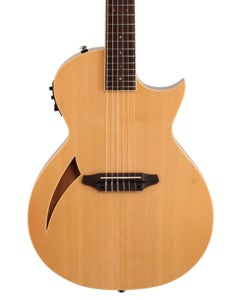
12 Payments of $50.00
h m s
A thin body acoustic guitar (also known as a thinline acoustic) has a shallower body depth than a standard acoustic — typically between 2 and 3 inches. That slimmer build makes it easier to hold and play for longer sessions, without giving up the warm, natural tone acoustic players are after.
If you've ever picked up a full-size dreadnought, you know the feeling — it's basically hugging a small wooden boat. Traditional acoustic guitars are built big mainly for projection, volume, and resonance. But that size comes at a real cost for players who prioritize comfort, portability, or easy access to those upper frets.
That's where the thinline acoustic guitar steps in. Slimmer in body depth but big on character, thin body acoustics have quietly become one of the most versatile guitar styles around. If comfort, portability, and easy upper-fret access matter to you, a slim acoustic might just be your missing piece.
So, you’ve decided to go slim. Now comes the fun part: choosing your favorite. Here are some things to keep an eye on when browsing our selection:
Are thin body and thinline acoustic guitars the same thing? Essentially, yes. The terms are used interchangeably across the industry. Some manufacturers prefer "thinline," others say "thin body" or "slim body," but they all describe the same reduced-depth design.
The honest answer: a lot of people.
Beginners benefit from the reduced body depth, which lowers the physical barrier to playing. If wrapping your arm around a full-size acoustic makes you feel like you're attempting a yoga pose, a thin body acoustic is a much better starting point.
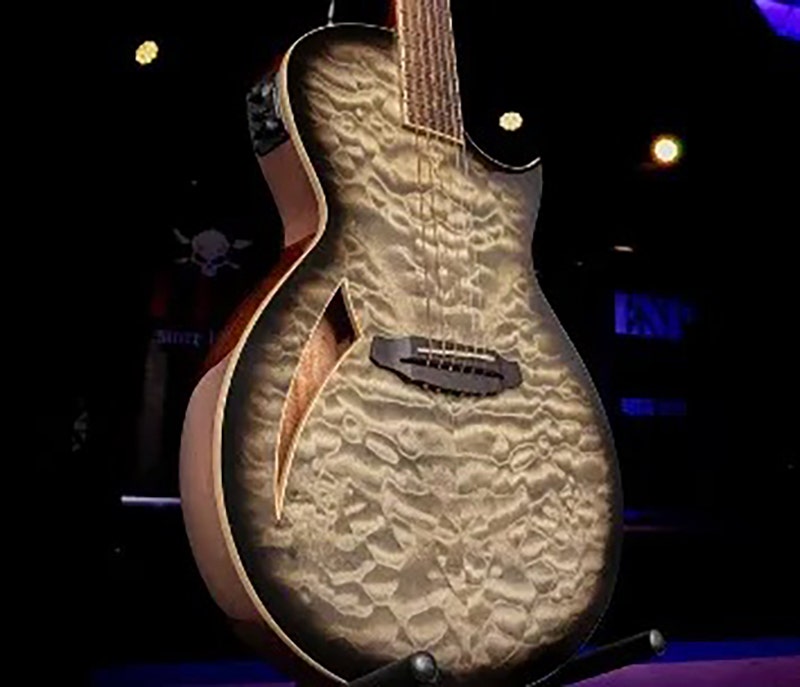
Gigging players love thinline acoustics for the same reason touring bands love compact gear: less bulk, easier transport, and a profile that won't hog the stage. Most models also come with onboard electronics, so plugging in and getting more volume is simple.
Electric guitarists looking to add an acoustic to their arsenal won't need to adjust much. The slimmer body mirrors what they're already used to, making the transition feel natural.
Fingerstyle players and singer-songwriters also gravitate toward thin body acoustics, where the articulate, balanced tone complements melodic playing styles rather than getting in the way of them.
If a dreadnought is your big, burly frontman, the thinline acoustic guitar is the quietly confident session player. They show up in a wide range of genres where tone, comfort, and clarity are most important.
Brands like ESP, Fender, and Ibanez lead the pack when it comes to thinline guitars. Each brings something a little different to the table — whether that's sleek aesthetics, tonal versatility, or solid build quality. There's no shortage of great options, whatever your playing style is.
Body shape still matters even when depth is reduced. A grand auditorium thinline will project differently than a smaller cutaway acoustic guitar, and the body shape influences tone as much as the depth does. If you're comparing styles, knowing how a dreadnought feels versus a slimmer shape helps you understand what you're trading off.
A few questions to guide your decision:
No matter your style or budget, there's a thin body acoustic out there waiting to meet your fingers.
Your friends at American Musical Supply have a deep selection of thin body acoustic guitars across all the top brands, so you're never stuck choosing from a shelf of two. AMS offers flexible 0% interest payment plans using your existing credit card, VERY fast free 2-day shipping across the US, and customer service from actual musicians who've held these guitars in their hands.
Once you've landed on the right slim acoustic guitar, it's worth thinking about the rest of your setup. Quality microphones let you capture the natural warmth of an acoustic in the studio or on stage without losing anything in translation. If you write your own music, adding keyboards to your toolkit opens up harmonic possibilities that pair beautifully with fingerstyle and singer-songwriter arrangements.
Shop the full thin body acoustic guitar collection at AMS and find the one that fits the way you play.
A thinline acoustic guitar is an acoustic guitar built with a shallower body depth than standard acoustics, typically between 2 and 3.5 inches. The reduced depth makes the guitar easier to hold and more comfortable to play for extended periods, and most thinline models include onboard pickups for amplified performance.
Yes. "Thin body" and "thinline" describe the same reduced-depth acoustic guitar design. Different brands use different terminology, but the concept is identical: a shallower body for improved comfort and playability, usually paired with onboard electronics.
Yes, thin body acoustic guitars are generally a bit quieter unplugged than full-size acoustics. The smaller internal body cavity produces less acoustic volume and projection. Most players offset this with built-in electronics, so plugging into an amp or PA brings the volume right back up.
You don't need an amp to play a thin body acoustic guitar, but many thinline models include onboard pickup systems that make amplification easy when you want it. For home practice, unplugged is fine. For live performance or recording, connecting to an amp, audio interface, or PA system will give you much better control over your sound.
A thin body acoustic guitar is often a great choice for beginners. The shallower depth is easier to reach around, which makes basic chords and strumming patterns less physically demanding to learn. That said, body shape and overall scale length matter too, so trying a few options before buying is always a good idea.
Thinline acoustics work well for fingerstyle playing. The balanced, articulate tone that comes with many slim acoustic guitar body shapes suits fingerpicking and melody-focused styles naturally. Nylon-string thinline models are particularly popular among fingerstyle players for their warm, responsive feel.