
Related Concert Acoustic Guitars Content

What Is Scale Length

7 Most Common Acoustic Guitar Body Styles

The Best Acoustic Guitars Under $500
Featured Brands


Get FREE shipping on all orders!
Fast FREE shipping on all orders!


12 Payments of $66.58
h m s

12 Payments of $158.33

12 Payments of $66.58
h m s

12 Payments of $83.25
h m s

12 Payments of $199.91
h m s
12 Payments of $66.58
h m s

12 Payments of $139.08
h m s

12 Payments of $140.00

12 Payments of $56.67
h m s

8 Payments of $57.50
h m s

8 Payments of $43.75
h m s

12 Payments of $65.00
h m s

12 Payments of $54.17
h m s

4 Payments of $62.50
h m s

8 Payments of $66.25

6 Payments of $36.50
h m s

12 Payments of $66.58
h m s

12 Payments of $54.17
h m s

12 Payments of $250.00
plus $1,299.00 down
h m s

12 Payments of $50.00
h m s

12 Payments of $141.67

6 Payments of $23.17

12 Payments of $52.42

12 Payments of $52.42
h m s
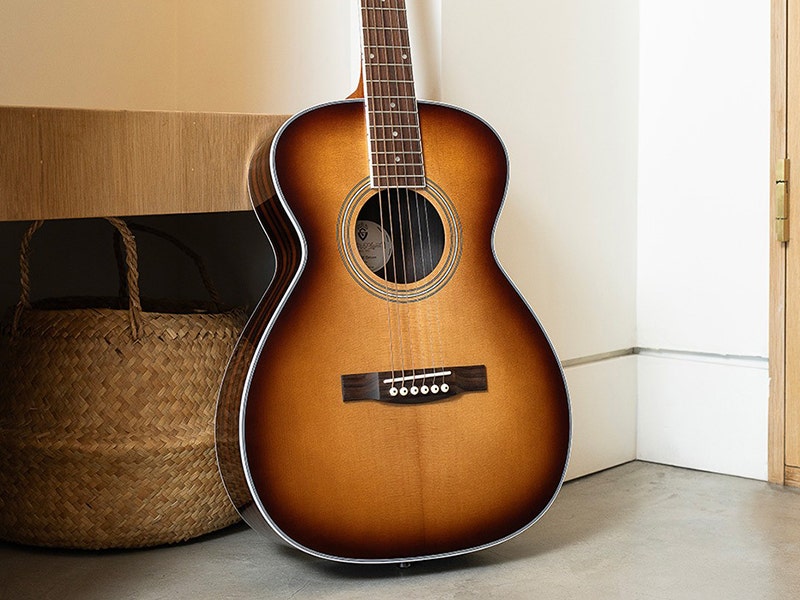
A concert acoustic guitar is a compact, mid-sized body style built for comfort and balanced tone. It trades some of a dreadnought's bass volume for tighter clarity, which makes it a strong pick for fingerstyle playing, smaller hands, or anyone who wants a small acoustic guitar for adults that's easy to hold through longer sessions.
A concert acoustic guitar's smaller, curvier body sits comfortably against your ribs and forearm rather than pressing outward like larger guitars tend to do. Compared to a dreadnought or jumbo, the concert size trims down the lower bout and body depth, making the whole instrument feel lighter in your lap. It's a shape built for control and comfort, especially for players with smaller hands or shorter arms.
The concert body is meaningfully smaller than a standard dreadnought, which typically runs closer to a 15.5-inch lower bout. The shorter scale length also shrinks the distance between frets, which can make chord shapes and stretches easier to reach.
Does a smaller body always mean a quieter, thinner sound? Not necessarily. A concert body can still surprise players with its punch, especially when paired with solid tonewoods and a well-braced top. What changes is the balance: a concert guitar tends to favor midrange clarity over deep bass response, while a dreadnought pushes more low-end volume and projection. For a shopper weighing dreadnought vs. concert guitar options, the real question isn't which one is louder. It's really which balance of volume and clarity fits how you actually play.
Neither is objectively better; it comes down to how you play. Dreadnoughts are built for big, open strumming. Their larger body moves more air, giving chords a fuller, louder low end that can fill a room. That same size, however, can work against smaller-framed players or beginners who find the bulk awkward to hold.
Concert bodies flip that equation. Their smaller size favors clarity over raw volume, which is a big reason so many players searching for the best acoustic guitar for fingerstyle land here. Fingerpicking depends on hearing individual notes clearly, and a concert guitar's tighter low end lets each note breathe. If you strum hard and need your guitar to fill a room, the dreadnought still wins. But if you pick, play fingerstyle, or simply want a small acoustic guitar that's comfortable to hold, a concert body is well worth a serious look.
The naming here gets confusing fast, especially since some manufacturers use "Grand Concert" to describe body shapes that live inside this Concert category. Several Taylor models labeled Grand Concert, for example, fall under this page because they share the same compact, comfortable footprint. Elsewhere in our catalog, Grand Concert acoustic guitars form their own separate, slightly larger category. In practice, you don't need to memorize the difference. Both concert and grand concert guitars are built to be compact and comfortable. The grand concert size simply adds a bit more body volume and low-end fullness without moving into dreadnought territory.
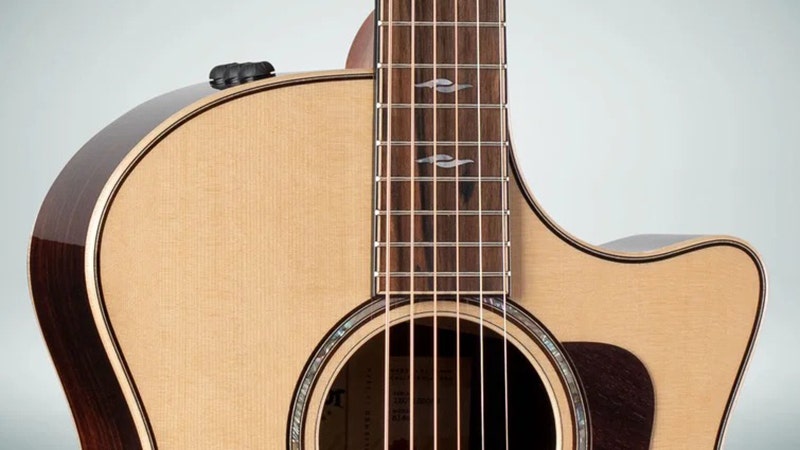
American Musical Supply carries concert acoustic guitars from Martin, Taylor, Yamaha, Breedlove, Alvarez, Godin, Gretsch, Guild, Merida and Luna, spanning entry-level instruments all the way through higher-end professional builds. Whatever price point fits your budget, flexible monthly payment plans are available at checkout, so you can spread the cost of a concert size acoustic guitar over time instead of paying the full amount up front. Easy!
Not quite sold on concert size? Before you make up your mind, give these similar shapes a look over:
Whatever size you land on, the best body shape is ultimately the one that you think feels comfortable in your hands and sounds right to your ears.
A concert acoustic guitar is a compact, mid-sized body style known for comfort and balanced tone. It has a smaller lower bout and shallower depth than a dreadnought, which makes it easier to hold for long practice sessions and popular among fingerstyle players.
Neither size wins across the board. Dreadnoughts favor loud, full strumming and are built for projection. Concert guitars favor tonal clarity and comfort, which makes them a strong choice for fingerstyle playing or smaller-framed players.
Concert acoustic guitars are available across a range of price points at American Musical Supply, from entry-level models to higher-end instruments from brands like Martin and Taylor. Flexible monthly payment plans are available to help spread out the cost.
Both are compact, comfortable body shapes. A grand concert guitar is typically a bit larger than a standard concert body, adding some extra volume and low-end fullness while still staying smaller than a dreadnought.
You can do both! Many players use concert guitars for both strumming and fingerstyle, especially in smaller rooms or for recording. It just might not project as much low-end volume as a dreadnought when strummed hard.
The best concert acoustic guitar for you comes down to your budget, tonewood preference, and playing style. There's no single right answer, but brands like Taylor, Martin, Yamaha, and Guild all make solid concert-body options worth comparing.