

-

Gretsch Jim Dandy Deltoluxe Dreadnought Acoustic Electric Black Top
$349.99Featuring a specially-designed slope shoulder body shape and a modest 24.75“ scale length, the Jim Dandy Deltoluxe Dreadnought offers a refreshingly comfortable and compact form factor without sacrificing the volume...8 Payments of $43.75
h m s
Skip to Content
Get FREE shipping on all orders!
Fast FREE shipping on all orders!
Dreadnought Acoustic Guitars
The square-shouldered dreadnought became the "standard" for acoustic guitars for good reason. They're big, they're loud, and they sound fanstastic with heavy strumming and flatpicking. If you want an acoustic that's not afraid to give it some guts, check out dreadnought acoustic guitars from top brands like Martin, Gibson, Yamaha, Taylor, Guild, Epiphone, and more to suit any budget or style.

Dreadnought Acoustic Guitars
The dreadnought is arguably the most popular acoustic guitar body shape ever made. Its wide, deep body produces a loud, powerful low end that makes it a natural fit for playing rock, folk, country, and bluegrass. Martin Guitar introduced the design in 1916, and it's been the industry standard ever since.
Walk into any guitar shop and you'll spot it immediately — hanging front and center, looking exactly like what you'd picture if someone said, "acoustic guitar." Square shoulders. Wide waist. Deep body. The dreadnought has been the world's most popular acoustic body style for over a century, and it didn't earn that title by accident.
But popularity only tells part of the story. The real secret is in the rich, full sound!
What Is a Dreadnought Acoustic Guitar?
A dreadnought sports a big, boxy body that’s purpose-built to really project your playing. Its square shoulders, wide waist, and deep body create more internal air volume than smaller acoustics, and that extra space is exactly what drives its natural volume and powerful low end.
C.F. Martin & Co. built the first dreadnought guitars back in 1916. The name comes from the HMS Dreadnought, a large British battleship. When Martin needed a word big enough to describe their new guitar's size and presence, the battleship seemed to be the right fit. The name stuck, and it's now the standard term for this body shape across every guitar brand.
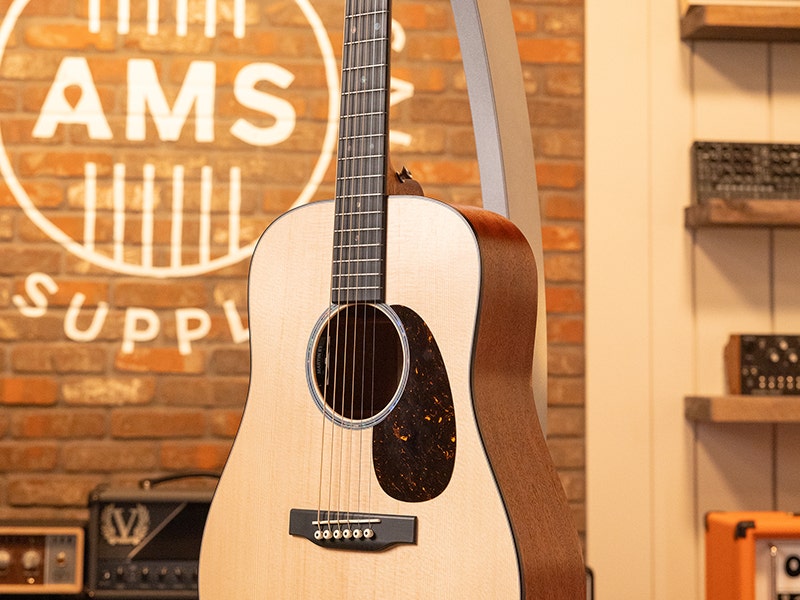
Why Is the Dreadnought the Standard Acoustic Shape?
The dreadnought's reputation speaks for itself. Its large body produces the loudest natural volume and the strongest low end of any common acoustic shape — competing only with the Jumbo. It cuts through when you're strumming full chords, singing over the top, or playing alongside other instruments in an ensemble.
That combination of volume and bass response is why folk, country, bluegrass, and rock players reach for a dreadnought first—and why most beginners learn on one. The campfire guitar is almost always a dreadnought for good reason. It fills the air with sound without ever needing an amp.
A dreadnought might not always be the right fit for everyone. Players with a smaller frame or shorter arms sometimes find the wide body awkward to hold against the chest. When comparing a dreadnought vs. concert acoustic guitar, the concert body trades some volume for better tonal balance and easier reach, which is a tradeoff fingerstyle players often prefer, since the concert shape responds more cleanly to individual notes than to strumming chords.
The dreadnought, by contrast, is great for strumming chords. If you're singing around a fire, playing rhythm in a band, taking on lead playing, or even learning your first chords, the dreadnought is definitely the right one to handle the job.
What to Look for When Buying a Dreadnought Acoustic Guitar
Choosing the right dreadnought comes down to a few key details that shape both the sound and the price tag.
How Do Dreadnought Tonewoods Affect Sound?
Knowing your tonewoods makes comparing dreadnought models a whole lot easier. Most dreadnoughts tend to pair a spruce top with rosewood or mahogany back and sides.
Spruce is bright and responsive, so your strumming stays clear and articulate even if you're playing one of the budget-friendly models. Rosewood adds complexity and warmth in the low mids, while mahogany delivers a more focused, midrange-forward tone. Both tonewoods play nicely with the dreadnought body shape, which already produces plenty of bass on its own. Consider the tonewoods as the seasoning — they add depth to the dish, but they don't exactly change the recipe.
Should You Choose a Solid Top or Laminate Dreadnought?
A solid top is cut from a single piece of wood, letting it resonate more freely and develop a richer, more complex tone the more you play it. It's a guitar that genuinely gets better with age. A laminate top, by contrast, is made from thin layers of wood pressed together. It's more affordable and handles humidity changes better, but it won't develop the same depth of tone over time.
Go solid top if you're committed to one guitar for the long haul. Go laminate if you need something durable and affordable for travel, practice, or life on the road.
What Is the Best Dreadnought Acoustic Guitar for Your Budget?
American Musical Supply carries dreadnoughts across every price range:
- Beginner ($200–$500): Entry-level dreadnoughts from Fender, Ibanez, and Takamine are solid starting points. If you're shopping for a dreadnought acoustic for beginners, this range gives you a reliable instrument without overcommitting.
- Mid-range ($600–$1,500): Step-up models from Martin, Taylor, Yamaha, and Takamine in this range add solid tops and onboard electronics for gigging players who need stage-ready performance.
- Premium ($1,600–$4,900+): Martin, Taylor, Gibson, and Yamaha lead the pack with their high-end dreadnought acoustic guitars, feature all-solid construction, higher-end finish work, and the kind of resonance that only hand-selected tonewoods can deliver.
Cutaway vs. Non-Cutaway Dreadnought
A cutaway removes a section of the guitar's upper body so you can reach the highest frets more easily. The change in body volume is small, so most players notice only a minor shift in bass response — not a dramatic one.
Pick a cutaway if you play lead lines or solos above the twelfth fret. Stick with a standard non-cutaway body if you mainly strum chords and want the fullest low end the dreadnought can offer.
Martin Goes Super with the Super D Dreadnoughts
Martin invented the Dreadnought Acoustic Guitar back in 1916. But more recently, they made their iconic body shape even more powerful with the Super D. They’re deeper, bigger, and project even more of that powerful tone that made Martin a household name. Check it out if you want even more from your acoustic guitar.

Not Sure a Dreadnought Is Right for You?
Still weighing your options? Browse the full Acoustic Guitars collection at American Musical Supply to compare every body style side by side.
If you want more balance and detail with less bulk, start with our Concert Acoustic Guitars or Grand Auditorium Acoustic Guitars. Want the dreadnought's size with easier access to the upper frets? Our Cutaway Acoustic Guitars collection has you covered.
Once you've picked your dreadnought, a padded acoustic guitar cases protects the guitar's large body during transport, and a fresh set of 6-string acoustic guitar strings keeps the tone bright as older strings wear down. Not sure what strings to put on it? Our Guitar String Buyer's Guide breaks down everything from gauges to materials.
Frequently Asked Questions About Dreadnought Acoustic Guitars
What does "dreadnought" mean on a guitar?
The name comes from the HMS Dreadnought, a large British battleship from the early 1900s. When C.F. Martin & Co. released this larger, louder body style in 1916, the ship's name became the shorthand for its size and power. The term is now the universal label for this body shape across every guitar brand.
What is the difference between a dreadnought and a regular acoustic guitar?
For most players, the dreadnought is the “regular” acoustic guitar — it's the most common body shape sold today. Compared to smaller shapes like the concert or grand auditorium, a dreadnought has a wider waist, square shoulders, and a deeper body. That extra volume translates to more projection and a stronger low end, at the cost of some tonal balance and ease of hold.
Are dreadnought guitars harder to play?
Not for most players. The neck profile and string spacing are the same as other steel-string acoustics, so chords and scales feel familiar. The one adjustment is the body size. Players with a smaller frame sometimes need a few weeks to get comfortable holding the wider lower bout against their chest and picking arm.
Is a cutaway dreadnought better than a standard dreadnought?
Neither is objectively better. A standard dreadnought maximizes low end and volume. A cutaway dreadnought sacrifices a small amount of body volume in exchange for easier access to the highest frets. Choose a cutaway if you regularly play lead lines or solos past the twelfth fret. Choose a standard body if you mainly strum chords and want the fullest sound the dreadnought shape can deliver.
How much does a good dreadnought acoustic guitar cost?
A dependable beginner dreadnought runs about $200 to $500. Mid-range models with solid tops and onboard electronics cost $600 to $1,500. Premium dreadnoughts from top-tier brands start around $1,600 and can exceed $4,500 for all-solid, hand-finished instruments.
What size is a dreadnought guitar?
A modern dreadnought body measures approximately 20 inches long and about 15.5 inches across the lower bout — its widest point. That makes it noticeably larger than a concert or grand auditorium body, which is a big part of why the dreadnought produces such strong natural volume.