
-

Fryette Valvulator Mini Tube Buffer
$199.00The Fryette Valvulator Mini is a high voltage vacuum tube–based buffer designed to preserve and enhance your guitars' tone by converting the signal from high to low impedance. This process eliminates high-frequency ...6 Payments of $33.17
-
Radial Engineering ProAV1 Passive DI for Audio Visual
$154.99A necessity for your audio toolkit The ProAV1 provides you with the ability to connect almost any audio source to a PA system, while automatically summing stereo sources to mono to preserve channels and simplify...6 Payments of $25.83
h m s
-
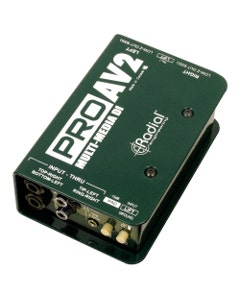
Radial Engineering ProAV2 2-Channel Passive DI
$229.99The ProAV2 is a stereo passive direct box designed for audio-video integrators and technicians, with an array of input connector options to easily interface with a wide range of audio equipment. Connect any...6 Payments of $38.33
h m s
-
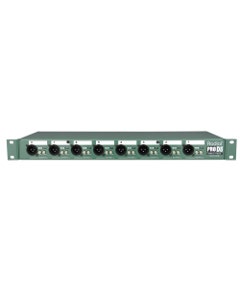
Radial Engineering ProD8 8-Channel Passive DI
$1,029.99The Radial ProD8 is a high density 8 channel passive direct box designed specifically for keyboard systems in pro touring environments. Each channel features dual ¼” inputs that are pre-merged using a resistive circ...12 Payments of $85.83
h m s
-
Radial Engineering ProISO Passive Stereo Line Cnvr
$209.99The ProISO is a stereo interface designed to take a high output +4dB line level signal from a mixing console and convert it so that it may be connected to low level unbalanced devices. In effort to adapt to all of t...6 Payments of $35.00
h m s
-
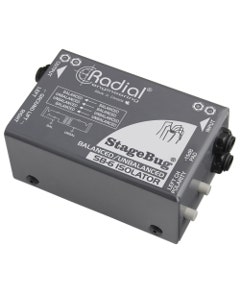
Radial Engineering StageBug SB6 Passive Audio Iso
$159.99The SB-6 is a passive audio isolator designed to be inserted into the signal chain to block hum and buzz caused by ground loops. The SB-6 accepts both unbalanced or balanced signals and is equally suitable for elect...6 Payments of $26.67
h m s
-
Radial Engineering SGI Stereo Instrument Interface
$499.99The SGI Stereo is a two-channel version of our SGI system, and consists of two boxes: the SGI Stereo TX transmitter and the SGI Stereo RX receiver. A high-performance stereo line driver system for guitars, the SGI S...8 Payments of $62.50
h m s
-
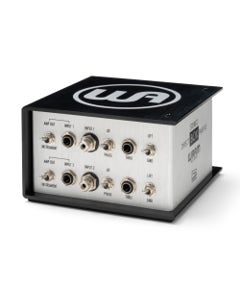
Warm Audio WA-DI-A2 2-Channel Active Direct Box
$389.00The Warm Audio Active Stereo DI is a two-channel direct box designed for stereo instruments including keyboards, synthesizers, guitar processors, and stereo pedalboards. Built with premium CineMag USA transformers, ...8 Payments of $48.63
h m s
-
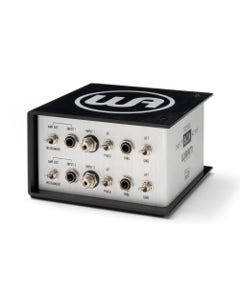
Warm Audio WA-DI-P2 2-Channel Passive Direct Box
$319.00The Warm Audio Passive Stereo DI is a passive two-channel direct box designed for stereo instruments including keyboards, synthesizers, guitar processors, and stereo pedalboards. Built with premium CineMag USA trans...8 Payments of $39.88
h m s
Skip to Content
Get FREE shipping on all orders!
Fast FREE shipping on all orders!
Direct Boxes
Whether you're a guitarist going straight to the board, a keyboardist running stereo into the PA, or a sound engineer trying to eliminate a stubborn ground hum, a direct box is one of the most useful tools you can have in your kit. AMS carries a wide selection of DI boxes for every instrument and application.




Direct Boxes: Clean Signal, Zero Compromise
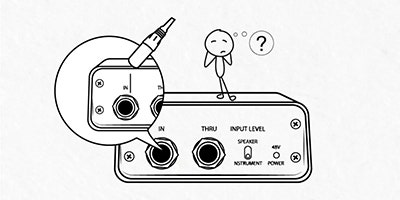
A direct box is one of the most essential and most overlooked pieces of gear in any live or studio rig. Also called a DI box (short for "direct injection"), a direct box takes an unbalanced instrument-level or line-level signal and converts it to a balanced, low-impedance mic-level signal that feeds cleanly into your mixer or recording console. The result is a stable connection over long cable runs, no ground hum, and no signal degradation, just the purest version of your instrument hitting the board.
At AMS, we carry direct boxes from Radial, Rupert Neve Designs, Samson, ART, Whirlwind, Warm Audio, Hosa, and more, with options for every instrument, every application, and every budget.
Whether you're running direct to the house at a gig, tracking in the studio, or connecting a laptop and DJ gear to a PA, there's a direct box built for exactly that job.
What Does a Direct Box Actually Do?
A DI box solves a fundamental mismatch between instruments and professional audio equipment. Here's what's happening inside that small metal box:
- Impedance conversion: Instruments output high-impedance signals; mixers and consoles want low-impedance. A DI bridges that gap so your tone translates accurately.
- Balanced output: Converts unbalanced signals (1/4" TS) to balanced XLR, which rejects noise and hum over long cable runs.
- Ground lift: Eliminates ground loops that cause that infamous 60-cycle hum in live and studio environments.
- Parallel thru output: Most DIs include a parallel 1/4" output so you can send signal to your amp on stage while also running direct to the board.
- Level matching: Many models include a pad switch to handle hot line-level signals from keyboards, DJ mixers, or playback devices without overloading the input.
Types of Direct Boxes
The right direct box depends on your instrument, your signal source, and how much control you need over your tone. AMS carries all four main types, so you can find the right fit without compromise.
Passive Direct Boxes
Passive DIs require no power. They use a transformer to handle impedance conversion and isolation. They're incredibly reliable, road-tough, and transparent-sounding, making them a go-to for guitar, bass, and any application where you want your natural tone to come through uncolored. Models from Radial are staples on professional stages for exactly that reason.
Active Direct Boxes
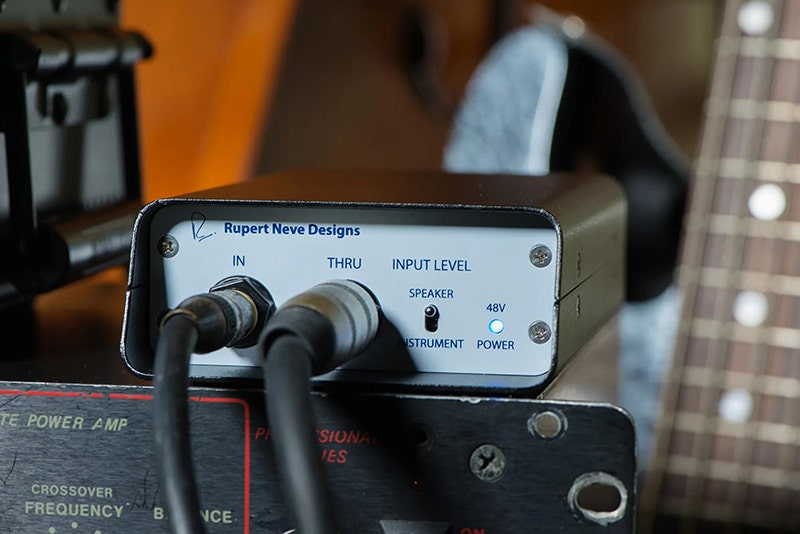
Active DIs run on phantom power, battery, or AC power and include a buffering amplifier that gives them more headroom and a stronger output signal. They're especially useful for instruments with passive pickups, such as a standard electric guitar or bass, where the added gain helps preserve low-end and high-frequency detail. Radial, Rupert Neve Designs, and Warm Audio active direct boxes are strong options in this category.
Direct Box for Acoustic Guitar and Orchestral Instruments
Acoustic instruments, particularly those with piezo pickups, have unique impedance requirements that a standard DI can struggle with. A specialized direct box for acoustic guitar, like the Radial PZ-DI, lets you match the input impedance to your specific pickup type (magnetic or piezo) and dial in a variable low-cut filter to tame unwanted low-frequency resonance. If you're running acoustic guitar, violin, upright bass, or any orchestral instrument direct, this is the category to shop.
Stereo Direct Boxes
Keyboards, synths, DJ mixers, laptops, and playback devices all output stereo signals, and a direct box stereo model handles both channels in a single compact unit. The Radial Pro D2, Samson MD2 Pro, and Samson MCD2 Pro are all purpose-built for this, giving you two transformer-isolated channels, ground lift on each, and a clean balanced output for both left and right feeds.
What is a D.I. Box and why do I need one?
This video explains the function of a direct injection (DI) box and showcases several options available at American Musical Supply. A DI box is essential for converting unbalanced, high-impedance signals (like from a guitar or bass) into balanced, low-impedance signals suitable for mixers and mic preamps.
How To Choose the Right Direct Box
With so many options on the market, narrowing it down is easier when you focus on a few key variables:
- Instrument type: Passive pickups benefit from active DIs; line-level sources and keyboards work well with passive models; acoustic instruments with piezo pickups need impedance-selectable designs.
- Mono vs. stereo: If your source outputs a stereo signal, get a two-channel DI; a single-channel box will only capture half your signal.
- Power source: Passive DIs need no power; active DIs run on 48V phantom, battery, or AC. Confirm your mixer provides phantom if you're going that route.
- Application: Live stage use calls for rugged, road-worthy construction; studio use can prioritize maximum transparency and tonal character.
- Channel count: If you need to DI an entire band's worth of sources, look at multi-channel rack-mount options like the ART PDB4.
Frequently Asked Questions About Direct Boxes
Do I need a direct box for electric guitar?
It depends on your setup. If you're running your guitar through an amp, you may not need one; your sound engineer can mic the cabinet. But if you want to go straight to the board without an amp, a direct box is essential. It gives the mixer a proper signal level and impedance match, and you'll typically get a cleaner, more consistent result than a poorly placed mic on a loud stage.
What's the difference between an active and passive direct box?
A passive DI uses a transformer and requires no power. It's highly reliable and typically very transparent. An active DI uses a buffering amplifier and needs phantom power, a battery, or AC power. Active DIs tend to offer more headroom and output level, making them a better fit for instruments with passive pickups that produce a weaker signal.
Do I need a special direct box for acoustic guitar?
If your acoustic guitar uses a piezo pickup, a standard DI can sometimes produce a harsh or thin tone because of an impedance mismatch. A dedicated direct box for acoustic guitar, like the Radial PZ-DI, lets you adjust the input impedance to suit your pickup type, which makes a noticeable difference in how natural and full your acoustic tone sounds through the PA.
Shop Direct Boxes at American Musical Supply
AMS carries direct boxes for every instrument, every signal source, and every stage of the signal chain, from compact single-channel passive DIs to full stereo and multi-channel solutions. Every direct box ships VERY fast and free, comes backed by our Gold Lock Extended Warranty at no extra cost, and is available on 0% interest payment plans.
Questions about which DI is right for your setup? Call our gear experts at 800-458-4076. We'll help you find the right box for your rig.