
-

Galaxy Audio ASD-700-2 Twin Pack UHF IEM In Ear Monitor System
$389.99ASD-700-2B5 Twin Pack Digital UHF Plug & Play Wireless In-Ear Monitor System, 15 Selectable UHF Channels, Includes (1) ASD-700T, (2) ASD-700R, (2) EB5 Earbuds and Carry Case Frequency CODE:B5 550-569 MHz ...8 Payments of $48.75
h m s
-
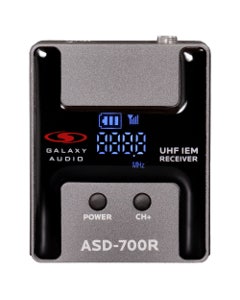
Galaxy Audio ASD-700R UHF Digital IEM In Ear Monitor Receiver
$149.99ASD-700RB5 Digital UHF Plug & Play Wireless In-Ear Monitor Receiver, 15 Selectable UHF Channels, Includes ASD-700R, and EB5 Earbuds Frequency CODE: B5 550-569 MHz Introducing the Galaxy Audio ASD-700 Plu...6 Payments of $25.00
h m s
Skip to Content
Get FREE shipping on all orders!
Fast FREE shipping on all orders!
In Ear Monitor Systems
Bring everything into crystal-clear focus with wireless in-ear monitor systems from American Musical Supply! We're stocked with the most popular models from trusted brands, and they are eligible for our 0% interest payment plans - these are the choices of professionals, touring groups, and venues everywhere. It is crucial to hear yourself and everything else that is going on during a performance. When you have a monitor feed sent directly to these in-ears, you'll enjoy an accurate, focused mix that can be tailored to your exact liking. The rugged receivers come in smaller stage box and full rackmount multi-unit varieties, provide clean sound, and give you the freedom to roam the space - with some models allowing you to go hundreds of feet from the source in the right environment. With just these comfortable, immersive earphones and flexible bodypacks to give you what you need, you can cut down on stage noise, free up space by eliminating stage monitors, and lock right in with every musical element of the show!

In-Ear Monitor Systems: Hear Yourself Clearly, Every Night
If you've ever struggled to hear yourself over a loud stage mix, an in-ear monitor system is the upgrade that changes everything. Instead of relying on floor wedges that bleed into your mic and fight with the front-of-house mix, IEMs deliver a clean, controlled personal mix straight to your ears, so you can hear exactly what you need, exactly when you need it.
At AMS, we carry in-ear monitor systems from trusted names like Shure, Sennheiser, Galaxy Audio, VocoPro, Audio-Technica, Phenyx Pro, Sensaphonics, and more, whether you're outfitting a solo performer or an entire band.
A good IEM system doesn't just protect your hearing; it improves your performance. When your monitor mix is dialed in and isolated from the stage noise around you, you pitch better, play tighter, and feel more confident every time you step up to the mic.
What's Included in an In-Ear Monitor System
Most IEM systems are built around three core components that work together to get your mix from the board to your ears without a cable running across the stage. Here's what you'll typically find in a complete setup:
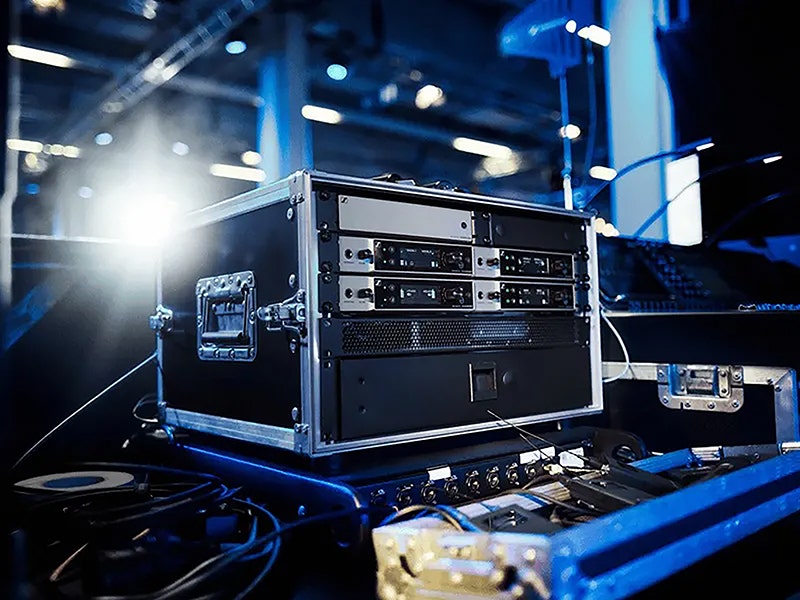
- Transmitter: Plugs into your mixer's aux send or monitor output and broadcasts the signal wirelessly; typically mounts in a half-rack space or sits with your stage gear.
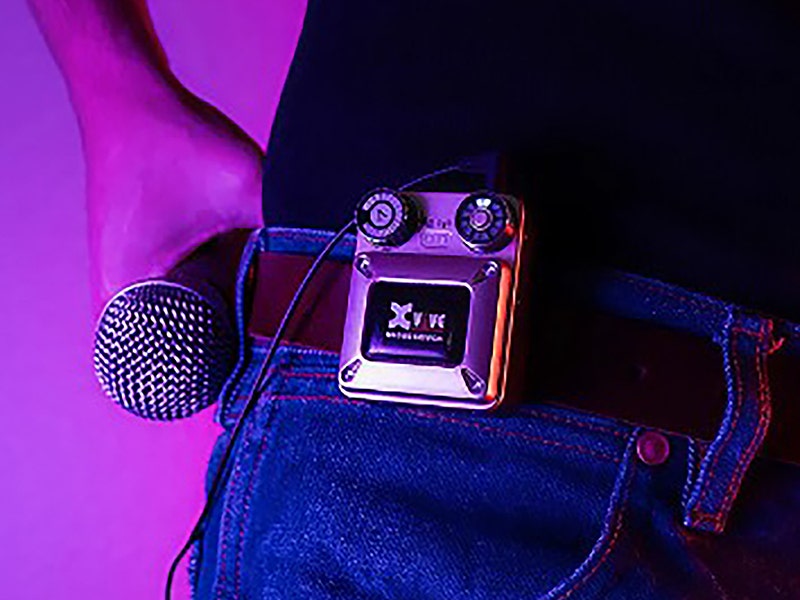
- Bodypack receiver: Worn on your belt or clipped to your waistband, picks up the transmitted signal.
- Earphones: The earbuds or custom molds that deliver the mix directly to your ears.
- Mixer integration: Your in-ear monitor system mixer send (usually a dedicated aux) feeds each performer their own personalized mix.
- Frequency band: Most systems operate in UHF ranges with multiple selectable channels; always scan for a clean frequency before the show.
Types of In-Ear Monitor Systems
IEM setups vary, and the right system depends on your role on stage, your budget, and how much control you want over your personal mix. Here's a breakdown of the main categories you'll find at AMS.
Single-Channel Wireless Systems
These are the most common entry points into IEM monitoring. A single transmitter broadcasts one mix to one bodypack receiver, making them ideal for solo artists, vocalists, or musicians who want a simple plug-and-play solution without a lot of setup complexity.
Multi-Channel Wireless Systems
When you're outfitting a full band, multi-channel systems let you run several independent IEM feeds simultaneously, each on its own frequency, so there's no interference. Every performer gets their own mix, and nobody has to compromise on what they hear.
Stereo vs. Mono Systems
Entry-level systems often transmit in mono, which gets the job done. Stereo systems split the signal into left and right channels, giving you a wider, more natural soundstage and better spatial separation between instruments. Some systems, like those from VocoPro, use two separate digital frequencies to deliver true stereo separation rather than relying on a single multiplexed carrier.
Personal Monitor Mixers
For bands where every performer wants hands-on control over their own mix, a dedicated personal monitor mixer pairs directly with your IEM system and puts individual level control in each performer's hands. No more asking the FOH engineer to turn up the guitar. When you're running the best in-ear monitor systems for a full production, personal mixers are what take things to the next level.
How To Choose the Best In-Ear Monitor System for Your Setup
The best in-ear monitor system for you comes down to a few key factors that are easy to nail down before you buy. Think through these before pulling the trigger:
- Number of performers: One system per person; make sure each unit operates on a different frequency.
- Frequency band compatibility: Verify the system's frequency range is approved for use in your region.
- Earphone quality: The transducers in your ears matter as much as the wireless hardware; don't skimp here.
- Mixer compatibility: Confirm your board has enough aux sends to feed every IEM system in your rig.
- Wireless range: Most stage setups are covered easily, but some models extend to hundreds of feet for larger venues.
- Mono vs. stereo: Stereo systems offer a more immersive, natural mix; mono systems are simpler and more affordable.
Frequently Asked Questions About In-Ear Monitor Systems
Do I need a special mixer to use an in-ear monitor system?
Not necessarily. Any mixer with an aux send can feed an in-ear monitor system. You just need a free aux output to serve as your monitor send. Dedicated personal monitor mixers give each performer hands-on control over their own mix, but a standard aux send on your FOH board works fine for smaller setups.
How many in-ear monitor systems can I run at once?
That depends on the frequency band and how many open channels you have available. Most wireless IEM systems operate on UHF frequencies with multiple selectable channels, and you can typically run several units simultaneously as long as each one is set to a different, non-conflicting frequency. Always do a frequency scan before the show.
Can I use regular earbuds with an in-ear monitor system?
Technically, yes, if the connector is compatible, but it's not recommended. Consumer earbuds don't provide the passive isolation or frequency response you need on a loud stage. Purpose-built IEM earphones make a significant difference in sound quality and hearing protection.
Shop In-Ear Monitor Systems at AMS
AMS carries in-ear monitor systems for every stage, every budget, and every performing style. Each system ships VERY fast and free, comes backed by our Gold Lock Extended Warranty at no extra cost, and is available on 0% interest payment plans so you can get the gear you actually need without breaking the bank.
Have questions about which system is right for your setup? Give our gear experts a call at 800-458-4076. We're happy to help you find the right fit.