Earn rewards every time you shop at AMS. You'll collect points on eligible purchases that turn into promotional savings on future gear, with points typically available several days after your order ships. All you need is a free AMS account — no credit card, financing, or payment plan required.
The more you shop, the more you earn. Create a free account and start earning from your very first eligible purchase. Rewards are applied as a discount on future eligible purchases.
Earn points on eligible purchases with AMS Rewards and turn them into savings on future orders, no credit card required. You can apply points at checkout once they’re available.
OR
0% Interest
Payment Plan
Don’t sell your soul to a creditor to get the gear you need. At AMS, we want to lower the barriers to create. That’s why we offer in-house 0% financing, and you don’t even have to open a new line of credit! Spread out payments on your credit card to simplify financing and avoid hefty late fees or service charges. Cost shouldn’t interfere with your creativity.
Did you know AMS is the only music distributor with four distribution centers? And that means we can offer super-fast shipping on all your music products. Whether you don’t want the spark of inspiration to fade or you really need that replacement speaker before the next show, we have you covered anywhere in the U.S. And even better, it’s FREE!

You shouldn’t have to pay extra for a little peace of mind. When you purchase from AMS, you’ll get a free 12-month extended warranty to cover your purchase — and that’s in addition to any manufacturer’s warranties! Thousands of items in our catalog feature the “Gold Lock Extended Warranty,” so you can feel confident in your purchase.

45
Day return
Sometimes the gear on the computer screen seems like a better fit than when you actually get your hands on it. We understand, and that’s why AMS offers an industry-leading 45-day money-back guarantee. If you’re not happy with an item, you have a full month and a half to send it back! We don’t want to just sell you gear. We want to sell you the RIGHT gear — even if it takes a few tries.

0% Interest
Payment Plan
Don’t sell your soul to a creditor to get the gear you need. At AMS, we want to lower the barriers to create. That’s why we offer in-house 0% financing, and you don’t even have to open a new line of credit! Spread out payments on your credit card to simplify financing and avoid hefty late fees or service charges. Cost shouldn’t interfere with your creativity.
Minor Blemished Products are items that have been returned in excellent condition with very minor cosmetic blemishes, allowing you to get great gear at a discounted price. In fact, many times our customers have difficulty finding the minor blemishes at all! These products are 100% inspected and tested to guarantee functionality. They include all components, manuals and the full Manufacturer's warranty unless otherwise stated, along with the AMS 45-Day Money-Back Guarantee to ensure your satisfaction. Special offers, promotions and rebates may not apply. The following manufacturers do not offer a warranty on Minor Blemished products: Casio, Ampeg, Avalon, Chauvet, Electro-Voice, Epiphone, Gibson, Ibanez, Kramer, Mackie, Maestro, Mesa, Peavey, PreSonus, Steinberger, Tobias
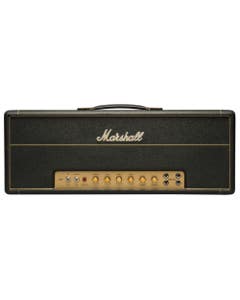
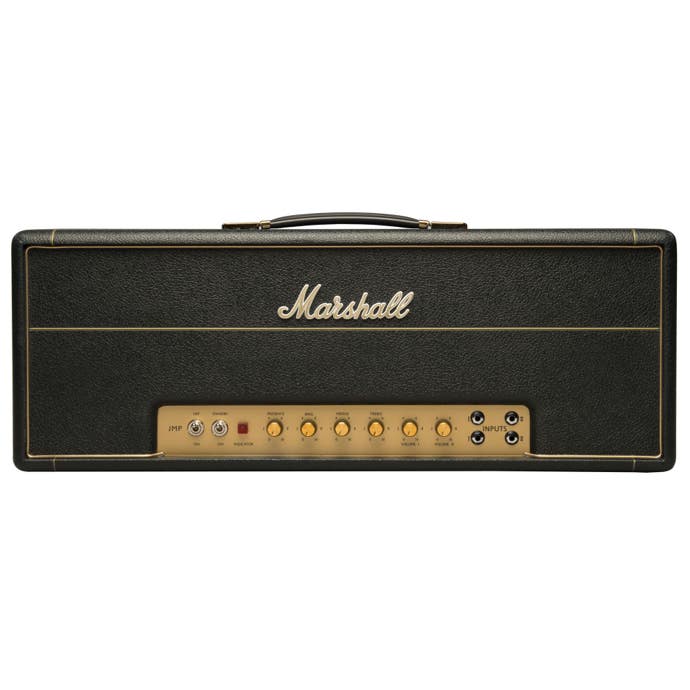
Some amplifiers fill a room. The Marshall 1959HW fills a legacy. This is the handwired reissue of the original 1959 Super Lead "Plexi" — the exact head that sent Jimi Hendrix sideways at Woodstock, and the same sonic weapon Eric Clapton pointed at audiences during Cream's wildest years.
Faithfully reconstructed from pre-July 1969 SL/A specs, built by hand in Marshall's English facility, and loaded with 100 all-tube watts of barely-tamed British firepower, the 1959HW doesn't just carry rock history — it is rock history. No digital presets. No effects loop. No master volume. Just glass, wire, and the most iconic crunch ever soldered together.
100 Watts of Raw, All-Tube British Power
No gain knob. No safety net. The 1959HW is a 100-watt, Class A/B all-valve amp that demands you turn up and commit. Four EL34 power tubes and three ECC83s in the preamp section conspire to produce the kind of saturated, harmonically rich breakup that no digital modeler has ever truly replicated — and trust us, they've tried.
4x EL34 Power Amp Tubes: The backbone of the classic Marshall sound. These British-voiced tubes respond dynamically to your playing, producing tight lows, punchy mids, and singing highs that bloom beautifully when pushed hard.
3x ECC83 Preamp Tubes (2 preamp + 1 phase splitter): Each stage contributes to the warmth, clarity, and harmonic complexity that define vintage Plexi tone — the kind of tone that makes other guitarists stop mid-conversation to ask, "What amp is that?"
Custom-Built Oversized Drop-Through Mains Transformer: Directly modeled from the original '60s units, this transformer sits at the heart of the amp's legendary feel and touch response, giving the 1959HW that elastic, breathing quality that players spend lifetimes chasing.
Handwired Construction, Crafted in England
The 1959HW is assembled the old-fashioned way: by human hands with a hot soldering iron, point-to-point, on a turret board. No PCB shortcuts. No corners cut. This is the same construction method used to build the amps that Pete Townshend once played and destroyed on stage.
Traditional Point-to-Point Handwired Circuit: Every resistor, capacitor, and pot is hand-installed by skilled technicians in Marshall's UK facility, resulting in a signal path as pure and uncolored as the originals from the 1960s.
Authentic Plexi Aesthetics: The iconic plexiglass front panel, original-spec knobs, and period-correct cosmetics make this amp as visually striking as it sounds — it's the kind of piece that earns its own spotlight in a backline.
Made in England: Proudly built in the same Marshall tradition that started it all, this isn't a budget homage — it's a legitimate heir to the throne.
Two Channels, Four Inputs, Infinite Trouble
The 1959HW keeps its control layout blessedly simple, yet rewards those who dig deeper. Two non-footswitchable channels — High Treble (Channel I) and Normal (Channel II) — each offer high- and low-sensitivity inputs to accommodate a wide range of pickups. But the real magic trick? Channel jumping. One extra cable between inputs unlocks a blended, harmonically supercharged tone that sounds like both channels got into an argument and decided to cooperate.
Dual-Channel Design with High and Low Sensitivity Inputs: Pair high-output humbuckers with the low-sensitivity inputs or let single-coils breathe through the high-sensitivity side — each channel responds differently, giving you a surprising range of textures from one amp.
Channel Jumping Capability: Connect the unused input of one channel to the other with a short patch cable, and you activate both simultaneously. The result is a broader, more complex tone with extra harmonic richness and a smoother transition from clean to crunch.
Global 3-Band EQ with Presence Control: Bass, Middle, Treble, and Presence are shared across both channels, keeping the front panel clean and focused while still offering genuine tonal flexibility.
The Plexi That Started It All — Still the One That Ends Arguments
The Marshall 1959HW isn't trying to reinvent the wheel. It IS the wheel — or at least the most faithful reproduction of the wheel that reshaped rock and roll in the late 1960s. Whether you're pairing it with the matching 1960AHW handwired cabinet for a full-vintage stack, running it through an attenuator for studio sessions, or just cranking it in a rehearsal room until the neighbors reconsider their life choices, the 1959HW delivers an experience that no amp modeler, plugin, or digital approximation can replicate. This is the real thing.
Marshall 1959HW Features:
Handwired reissue of the iconic pre-July 1969 Marshall Super Lead "Plexi" head
100W, Class A/B all-valve construction
Preamp: 2x ECC83 + 1x ECC83 phase splitter
Power amp: 4x EL34 power tubes
Two non-footswitchable channels: High Treble (Channel I) and Normal (Channel II)
Four inputs total: high and low sensitivity on each channel
Channel jumpering capability for blended, dual-channel tone
Global 3-band EQ (Bass, Middle, Treble) and Presence control
Phone: Marshall will accept online forms or LIVE chat through their website for customer support.
Warranty: 1 Year on amps, pre-amps, FX pedals and speaker cabinet enclosures and a 90-day warranty for valves and fuses
Marshall 1959HW Hand Wired Guitar Amplifier Head Specifications
Product Specifications
Marshall 1959HW Hand Wired Guitar Amplifier Head Specifications
Output (RMS): 100W
Pre-Amp Valves: 3x ECC83
Power Amp Valves: 4x EL34
Tube Rectifier: No
Footswitch (supplied): No
Dimensions: 740 x 275 x 210 mm / approx. 29" x 11" x 8.3"
Weight: 22 kg / approx. 48.4 lbs
Frequently Asked Questions
The 1959HW produces the classic British "Plexi" tone: bold, dynamic, and harmonically rich, with a firm low end, singing midrange, and open, airy highs. It responds directly to your playing dynamics, cleaning up with a light touch and breaking into a muscular, singing crunch when pushed.
No, the 1959HW has no master volume control, staying true to the original 1965 circuit design. To achieve natural power amp breakup, you need to turn it up. Many players pair it with a load box or attenuator for home and studio use.
Very. This is a 100-watt all-tube head with no master volume, meaning it's designed to be played at serious stage volumes to reach its tonal sweet spot. It’s not a bedroom amp.
The 1960AHW (angled) and 1960BHW (straight) Handwired cabinets are the recommended matches, featuring salt-and-pepper grille cloth, Celestion G12H30 reissue speakers, and a 16-ohm mono configuration that completes the full vintage stack experience. Other Marshall 1960-series cabinets are also compatible using the rear impedance selector.

Channel jumping (or jumpering) involves connecting the unused input of one channel to the other using a short instrument cable, activating both channels simultaneously. This blends the voicings of Channel I (High Treble) and Channel II (Normal) for a thicker, more harmonically complex tone.