My Cart
0
You have no items in your shopping cart.
Get FREE shipping on all orders!
Fast FREE shipping on all orders!
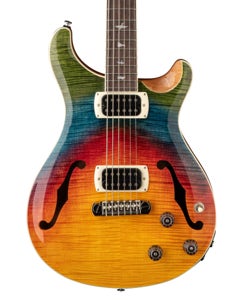
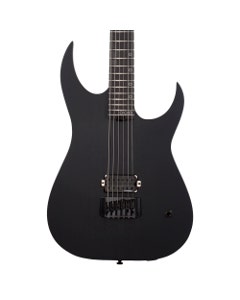
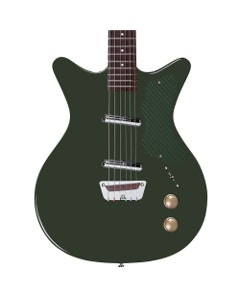
Wish your guitar could go just a bit lower but don't want to switch to a bass? A baritone guitar might be for you! The longer scale length keeps strings nice and tight at lower tunings, great for heavy chugging and low-twangin' country leads. AMS carries baritone guitars from some of the best brands in the industry, including ESP, Schecter, PRS, Jackson, and Danelectro to make it easy to find one that fits your style. Ready to get low?
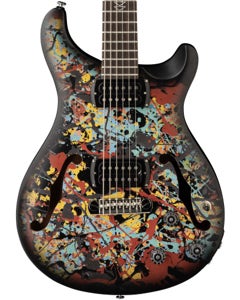
18 Payments of $88.83
h m s
Get It August 27th
18 Payments of $83.28
12 Payments of $133.25
h m s
Get It August 27th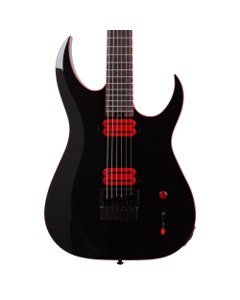
12 Payments of $124.92
12 Payments of $54.08

12 Payments of $141.58
h m s
Get It August 27th
12 Payments of $108.33

12 Payments of $73.33
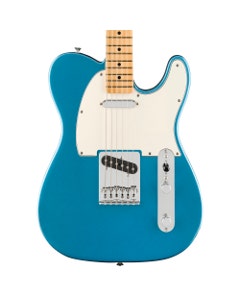
12 Payments of $73.33

12 Payments of $50.00
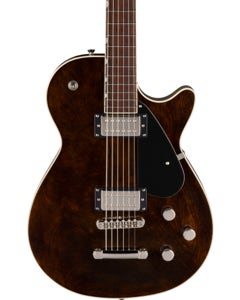
12 Payments of $58.33
h m s
Get It August 27th
12 Payments of $116.58
h m s
Get It August 27thA baritone electric guitar's built around a longer scale length — typically between 26.5 and 30.5 inches — and it's designed to be tuned lower than standard pitch. Duane Eddy, James Hetfield, and Brian Setzer have all picked up baritones to chase sounds you simply can't get from a regular electric guitar.
The question we hear most from buyers is: can't I just tune my regular guitar down? Technically, yes. But here's the thing — you'll hate the results. Drop a standard 25.5 or 24.75-inch scale guitar to B tuning and the strings go floppy, unresponsive, and kind of sad. The tone gets muddy, bending feels odd, and articulation goes out the window. A baritone's longer scale keeps proper string tension at lower tunings, and that tension is what gives it that tight, punchy low end you're actually after.
String gauge is another thing a lot of players don't think about until they're already home with the guitar. Standard strings don't cut it on a baritone — most players run .013-.062 or .014-.068 gauges. Our full guide to baritone guitars breaks down string setup and tuning options in detail if you want to go deeper before pulling the trigger.
Genre-wise, baritones attract two crowds that couldn't sound more different. Metal players love them for extended range, heavy drop tunings, and the kind of riff clarity that bands like Periphery and Animals as Leaders have built entire careers on. Then you've got country and surf players who use them for deep, resonant twang — a tradition that goes all the way back to Duane Eddy and Setzer. Same instrument, totally different worlds.
A baritone isn’t just a regular guitar tuned down; it’s purpose-built with a longer scale length that lets you detune the strings to much lower pitches without losing string tension, giving you a much cleaner, tighter tone than a standard electric ever could in the same range.

A baritone guitar's a bit of a different beast, but don't sweat it — the mechanics are still the same ones you know and love. It all comes down to dialing in the right scale length, strings, and hardware for your tuning and playing style. Nail those, and your baritone will sing. Get 'em wrong, and you've basically bought yourself a very expensive argument. Here's what to look out for before you pull the trigger.
Scale length is the single most important spec on a baritone — and it's worth understanding before you buy. The distance from the nut to the bridge saddle determines how much tension you're getting at a given tuning, and that tension is what shapes how the guitar feels and sounds under your fingers.
A 27-inch scale is where most players start, and it's a solid choice for B or C standard tuning. It's got that extended baritone feel without throwing off everything you've already learned on a standard electric. If you're chasing lower tunings — A standard, drop G, the sonic abyss — you'll want something in the 28 to 30.5-inch range to keep enough tension that your strings don't feel like wet spaghetti.
If you're new to baritones, just go with 27 inches. Your technique will carry over, the adjustment won't be brutal, and you'll still sound massive.
String gauge matters just as much as scale length on a baritone — don't sleep on it. Those .009s or .010s you've been using on your regular electric? They're definitely going to feel like wet noodles on a baritone scale at lower tunings. Most baritone players reach for sets in the .013-.062 or .014-.068 range, and some go even heavier depending on how low they're willing to go.
Before you buy, check what strings are already on it. A lot of baritones ship with standard gauges straight from the factory, which means you'll be restringing before you even get your first riff in. And if the guitar needs a professional setup after the restring — which it very well might — factor that in now so it doesn't catch you off guard later.
Bridge choice matters more on a baritone than on a regular electric — and that's not something you want to learn the hard way during the middle of your set. The higher string tension puts serious stress on the bridge over time, so getting this right from the start is worth it.
Fixed hardtails and tune-o-matic style bridges are your friends here. They handle that tension without complaint and stay in tune even when you're really digging in. Floating tremolo systems, on the other hand? Not so much. Balancing a trem against heavy baritone strings is a losing battle — the spring tension goes haywire, and you'll spend more time retuning than actually playing. If the baritone you're eyeing has a floating bridge, treat it as a red flag unless you've got experience wrangling one at baritone tension and actually want that feature.
Picking the right pickup for your baritone isn't rocket science — it's basically the same logic as any electric guitar. The catch? You're working with a lower frequency range, so the stakes are a little higher.
Humbuckers tend to handle the low end way better than single coils, especially when you're cranking the gain. That's why most metal baritones come loaded with them. Single coils, on the other hand, give you that crisp, airy twang — the kind that makes country and surf players smile ear to ear. And if you're really dropping it low and piling on the gain, active pickups (the ones that run on a 9V battery) are your best friend. They'll keep your tone tight and defined where passives might start getting a little muddy.
Here's the quick breakdown:
Baritone guitars come in pretty much all the same body shapes you're already used to. If you're a metal player, you'll feel right at home on a superstrat-style baritone — it's got that comfy double-cutaway design and plenty of upper-fret access for when you need to shred. More of an LP person? The mahogany body gives you a thicker, warmer low end that pairs nicely with those longer scale tones. And if you're into surf or indie, offset shapes like Jazzmaster- or Jaguar-style baritones aren't just cool-looking — they've got a unique resonance that's part of the whole vibe. The bottom line is body shape does affect the tone and comfort on a baritone exactly the same way it does on any other electric, so go with what feels right.
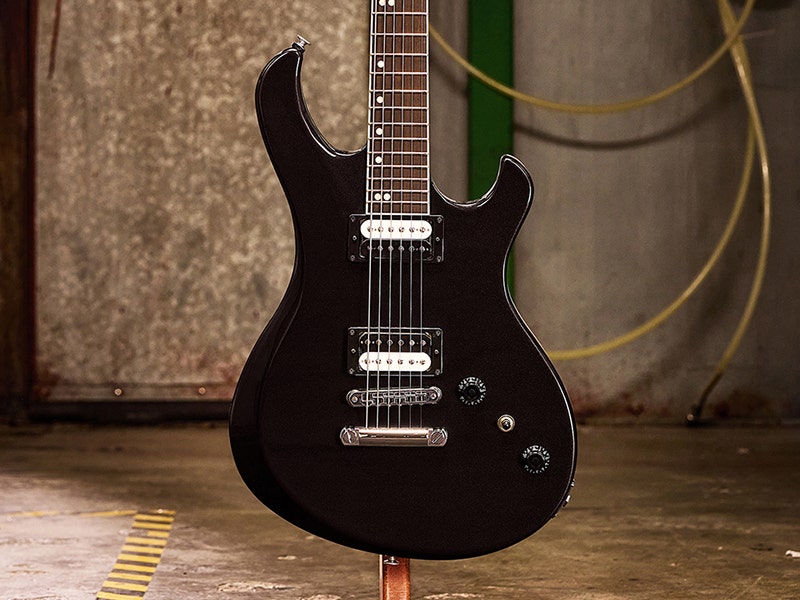
Whether you like Animals as Leaders and Periphery or Duane Eddy and Brian Setzer, baritone guitars are built to handle the full range of what lower tunings can really do for your sound.
The specs that matter on a baritone come down to one thing: what you're playing. A baritone built for drop-tuned metal has very little in common with one built for twangy country or surf. Here's how to approach the buying decision based on your playing style.
If you're playing metal on a baritone, you can't afford to have your low end turn into mush the second you crank the gain. You'll want a longer scale — 27 inches or more — so your strings stay tight and articulate even when you're downtuning into the abyss. Pair that with active or high-output passive humbuckers, and you've got the punch and clarity you need for heavy riffing.
A fixed bridge is non-negotiable here. Floating trems and drop-tuned metal don't exactly get along. The Ibanez Iron Label series and Jackson SLA6DX are purpose-built for this kind of playing — tight string tension, hot pickups, rigid body construction. It's the kind of setup that keeps every note defined, even when your riffs are anything but gentle.
If you’re playing country or surf on a baritone, you’re chasing that deep, glorious twang that makes the instrument sound like its soul is still intact. For that, grab passive single coils or low-output humbuckers — they let the guitar breathe instead of choking it. And stick to a fixed bridge; wrestling with tuning stability on strings this thick is a game you will lose.
Beyond that, it's really about tone and feel. A guitar like the Reverend Descent RA hits the sweet spot here. The offset body's comfortable, the pickup options give you real flexibility, and the whole package just sounds like a baritone should — warm and full, whether you're staying clean or pushing into light overdrive. It won't go sterile on you, which is exactly what you need when the vibe of the genre depends so much on the instrument sounding alive.
If you’re moving to a baritone from a standard electric, start with a 27-inch scale in a body shape you already know. A superstrat or LP-style body keeps the learning curve focused on the tuning and strings rather than the ergonomics. A mid-range guitar with solid construction, a fixed bridge, and reliable hardware will tell you whether baritone playing fits your style before you commit to a more serious investment.
If you're the kind of player who doesn't want to swap guitars every other song, a 27-inch scale tuned to C standard might be your sweet spot. It sits right between baritone and standard range, so it's just as solid playing through heavy riffs as it is cleaning up for something more melodic.
Here's a neat trick: slap a capo at the fifth fret on a B-tuned baritone and you're at standard pitch. That's two instruments in one, without the extra gig bag.
If versatility's the name of your game, look for a baritone with a flexible pickup setup and solid enough construction that it actually stays in tune when you're jumping between tunings. Because nothing kills the vibe like spending half your set time at the tuner.
Whether you're new to baritone or adding one to your collection, American Musical Supply has you covered. Our lineup spans budget-friendly starter models to pro-grade instruments — so you don't have to choose between making rent and making noise.
You’ll find top-tier brands spanning everything from metal to surf rock, with scale lengths from 27" to 30.5". There's a reason players crave that low, ground-shaking rumble. Find yours and start vibrating the floorboards.
If you want more strings rather than going with a different tuning, explore our 7-string electric guitars. A 7-string adds a low B string while keeping standard pitch on the top six, which gives you extended range without committing to a full retuning.
For even more range, our 8-string electric guitars extend the low end further still and are popular with progressive metal and djent players who need a wide tonal range from a single instrument.
If you decide baritone range isn’t quite what you’re looking for, browse our full collection of solid body electric guitars to find standard-tuned electrics in every body style, scale length, and price range.
These are the questions buyers ask most often before purchasing a baritone electric guitar.
A baritone guitar is an electric guitar with a longer neck — typically between 26.5 and 30.5 inches — designed for lower tunings than a standard guitar. Most players tune them to B standard, a perfect fourth below the usual E-A-D-G-B-E. That extra scale length isn't just aesthetic, though. It maintains proper string tension at lower pitches, giving baritones their signature chunky, tight low-end sound.
If you're exploring baritone guitar tunings, here is what you need to know. The most popular option is B-E-A-D-F#-B — standard tuning dropped a perfect fourth — which gives you the low, heavy sound baritones are known for. Want to go even lower? C standard and A standard are great options, especially on longer-scale instruments that can maintain proper string tension.
Drop A and Drop G are also popular in metal circles when regular guitars can't reach those low notes. Whichever tuning you choose, make sure your scale length and string gauge are compatible. Otherwise, your strings will be too loose, and your guitar won't sound very good.
Standard electric guitar strings — your typical .009s or .010s — won't cut it on a baritone. At lower tunings, they'll feel loose and pretty much useless. Most baritone players go for sets in the .013-.062 or .014-.068 range. Before you buy, it's worth checking what gauge comes stock on the guitar, since a lot of them ship with strings that aren't right for the tuning they're built for. You'll likely need to restring before it actually plays the way it should.
A baritone guitar is a 6-string instrument that's tuned lower than standard — think of it as your regular guitar, just dropped down a few steps. A 7-string guitar takes a different approach: it keeps the standard six strings where they are and adds a low B string below them. So, what's the difference? A baritone shifts everything down, while a 7-string gives you that low-end range without messing with the tuning you're already used to.
Yes, a baritone guitar uses a standard 1/4-inch output, so it'll plug right into your existing amp or pedal chain without any fuss. No special gear needed, just the guitar and the right strings. That said, if you want those low notes to really hit, an amp or cab with solid low-end response will do it justice.
Baritone guitars are a must-have for metal players who love drop tunings — but they've been around a lot longer than that. Country and surf musicians were all over them long before the genre had a name for it. Artists like Duane Eddy and Glen Campbell knew that deep, twangy tone was something special and ran with it. Today, baritones also pop up in post-rock, prog, and film scores — basically anywhere a guitarist or composer needs something that sits a little lower and hits a little harder in the mix.
Here at American Musical Supply, we have a wide variety of baritone electric guitars to suit any style. Whether you want a metal chug machine or a bright, snappy country or surf twanger, you can get it with VERY fast and free shipping and 0% interest financing. It has never been easier to get low.

When you visit our website, we store cookies on your browser to collect information. The information collected might relate to you, your preferences or your device, and is mostly used to make the site work as you expect it to and to provide a more personalized web experience. However, you can choose not to allow certain types of cookies, which may impact your experience of the site and the services we are able to offer. Click on the different category headings to find out more and change our default settings according to your preference. You cannot opt-out of our First Party Strictly Necessary Cookies as they are deployed in order to ensure the proper functioning of our website (such as prompting the cookie banner and remembering your settings, to log into your account, to redirect you when you log out, etc.). For more information about the First and Third Party Cookies used please follow this link.
More information
These cookies are necessary for our website to function and cannot be switched off in our systems. They are usually only set in response to your requests for services, such as setting your privacy preferences, logging into your account, or filling in forms. You can manually set your browser to block or alert you about these cookies, but it will prevent parts of our site from working as expected. These cookies do not store any personally identifiable information.
These cookies allow us to count visits and traffic sources so we can measure and improve the performance of our site. They help us identify which pages are the most and least popular and see how visitors move around our site. All the information these cookies collect is aggregated and therefore anonymous. If you do not allow these cookies, we will not know when you have visited our site and will not be able to monitor its performance.
These cookies enable the website to provide enhanced functionality and personalization. They may be set by us or by third-party providers whose services we have added to our pages. If you do not allow these cookies, then some or all of these services may not function properly.
Under the California Consumer Privacy Act, you have the right to opt-out of the sale of your personal information to third parties. These cookies collect information for analytics and to personalize your experience with targeted ads. You may exercise your right to opt out of the sale of personal information by using this toggle switch. If you opt out we will not be able to offer you personalised ads and will not hand over your personal information to any third parties. Additionally, you may contact our legal department for further clarification about your rights as a California consumer by using this Exercise My Rights link.
If you have enabled privacy controls on your browser (such as a plugin), we have to take that as a valid request to opt-out. Therefore we would not be able to track your activity through the web. This may affect our ability to personalize ads according to your preferences.
Select All