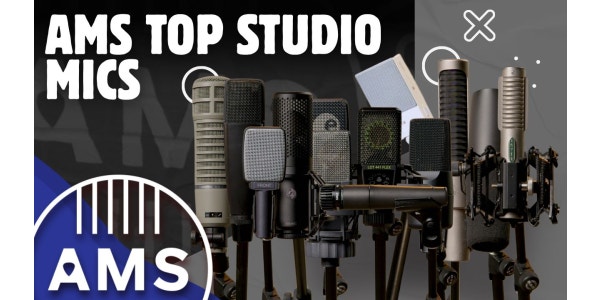
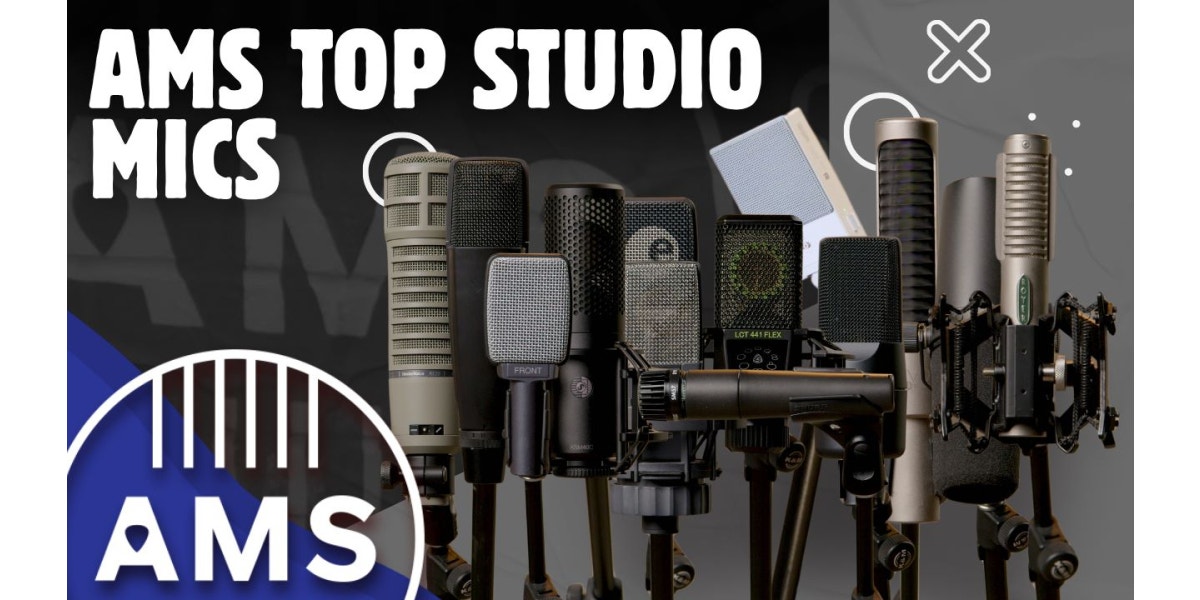
Finding the perfect sound for your studio often comes down to one decision: which microphone should you use? If you’re curious what mics we use in the AMS studio, here’s a list of our audio engineer’s 13 favorite microphones for mic’ing just about anything. Whether you need a dynamic, condenser, or ribbon mic, there’s something on the list for any occasion.
Our Favorite Dynamic Mics
Dynamic microphones are often the mics of choice for their versatility and durability. You can put them right up to a cranked guitar cabinet or snare drum, and they deliver amazing audio without even breaking a sweat.
Dynamic mics are also a great choice if your studio has “less-than-perfect” acoustics. They’re great at rejecting background noise, reflections, and room reverb, making them an ideal choice for recording beginners and bedroom producers.
Shure SM57
Yeah, yeah. We all knew this one would be right at the top of the list. The Shure SM57 is literally THE workhorse microphone. Like, the ONE. It’s indestructible, captures clear audio, doesn’t care how loud the source is, and doesn’t cost that much. It’s been the go-to instrument microphone for decades, and I doubt it’ll be replaced any time soon. Most recording pros have a few SM57s in their go bag, both as a primary recording mic and as a backup.
It doesn’t really matter if you’re a beginner or seasoned pro, if you want to record music, get yourself an SM57.

Why It’s Awesome
- High-quality audio capture
- Cardioid polar pattern
- Pneumatic shock-mount system
- Extreme durability
- Wide frequency response
- Can handle high SPL
- Inexpensive
Sennheiser e609 and e906
Take most of the amazing features of the SM57 and pop them into a square package. That’s the Sennheiser e609 and e906. They cover a lot of the same ground as the ’57, but they mount a bit differently, which is helpful for a lot of different applications. For example, you’ve probably seen them draped over a guitar cab, dangling in front of the speaker from the cable. Talk about easy mounting! They’re also great on drums or any other high-SPL source.

Sennheiser e609 Silver Dynamic Instrument Microphone
Special Price $99.95
Why It’s Awesome
- Durable metal construction
- Super-cardioid polar pattern
- Hum-compensating coil to prevent interference
- Great for mic’ing guitar cabinets
Shure SM7B
Sometimes, you just need a little bit more frequency range. For that full-range feel, grab a Shure SM7B. It’s technically a broadcast microphone beloved by podcasters, but audio engineers quickly grabbed them up for their incredible range and versatility.
The fun part is that podcasters tend to be somewhat frustrated by the SM7B — not because of its audio quality (it’s amazing) but because of its notoriously low output. They always had to grab a preamp or Cloudlifter to make it sound good. However, in the recording studio, the low output just means you can put it in front of some seriously loud gear and never have to worry about clipping. Guitar cabs, drums, screaming vocalists, it doesn’t matter!
And when you’re done in the studio, use it for your podcast. Win, win!

Why It’s Awesome
- Very wide frequency response (50 Hz – 20 kHz)
- Cardioid polar pattern
- Electromagnetic hum shielding for interference resistance
- Switchable bass roll-off and midrange boost
- Precision yoke mount design
- Very resistant to high-SPL sources
Electro-Voice RE20
The Electro-Voice RE20 plays in the same ballpark as the SM7B. It’s another great podcasting mic that crossed the lines into recording territory because of its clear audio capture and incredible SPL resistance.
Where the RE20 separates a bit from the SM7B is the frequency response. It’s AMAZING for anything with lots of low end thanks to its frequency range that dips all the way down to 45 Hz. That’s why it’s often called the “Kick Drum King.” Put it inside a bass drum and capture that thump-in-your-chest tone you’ve been looking for.

Why It’s Awesome
- Rugged metal chassis
- Low-end frequency response down to 45 Hz
- Bass roll-off switch
- True cardioid pattern
- Variable-D technology eliminates proximity effect
- Handles extreme SPL
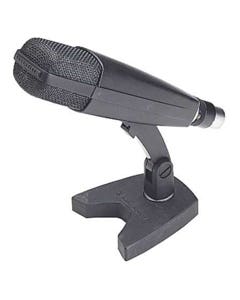
Sennheiser MD 421
We’ve talked a lot about the low-end and super-high SPL sources. What about other kinds of dynamic mics? The Sennheiser MD 421 really rounds out the dynamic locker. Yes, it can handle all the high-SPL sources just like the others on the list, but the Sennheiser has a variable high-pass filter, which means you can really dial it in for mids and highs.
Pop this on your toms and guitar cabinets for maximum results. But just like all the other mics on this list, it’s really a Jack of all trades. You can really use it anywhere, and it’ll get the job done. Don’t have much space? Check out the MD 421 Kompact.
Why It’s Awesome
- Rugged design
- Five-position bass roll-off
- Clear sound reproduction
- High SPL resistance
- Effective feedback rejection
- Internal bass tube for accurate and extended low-end response
Our Favorite Condenser Mics
When you think of a recording microphone, you probably jump straight to condensers. They’re the obvious choice when you really want to capture every, tiny, miniscule detail. Their super sensitivity, high output, lower self noise, and wide and flat frequency response make them a great choice for vocals, acoustic instruments, and room mics. When it’s time to get sensitive, these are the condenser microphones we reach for.
AKG C414KXLII
If the Shure SM57 is the “standard” dynamic mic, the AKG C414 is its condenser counterpart. It’s been used on just about any source imaginable in the studio and the stage. It’s a perfect match for instruments when you want the top end to sound very natural rather than hyped, like overheads, percussion, and higher-gain guitars. It’s also amazing for vocals.
The C414 is a bit pricey, so it’s not the best for beginners. If you want to get that iconic AKG sound on a smaller budget, check out the AKG 114. It has a lot of the same features as its flagship sibling but without the four-figure cost.
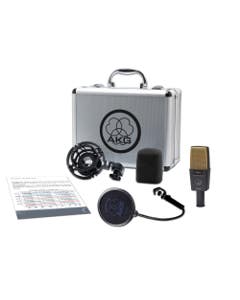
AKG C414XLII Reference Multi Pattern Large Diaphragm Condenser Mic
Special Price $1,099.00
Why It’s Awesome
- Nine selectable polar patterns
- Switchable bass cut filters
- Three pre-attenuation levels
- 152 dB dynamic range
- Super versatile
Shure KSM44MP
Shure recently revamped their KSM condenser microphone lineup, and the KSM44MP instantly shot to the forefront of our mic locker. We use it a lot in voiceovers, but it can really do everything. It has tons of clarity and an honest midrange, which is exactly what a condenser mic should do.
And just like the 414, the KSM44MP features selectable polar patterns, so you can use it in a variety of studio situations. Throw in the sleek design, ultra-low self noise, and included accessory bundle, and it’s no wonder why the KSM44MP is one of the most popular condenser mics for engineers everywhere.
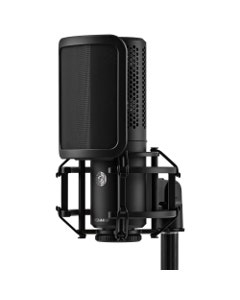
Shure KSM44MP Multi Pattern Large Diaphragm Microphone Bundle
Special Price $1,099.00
Why It’s Awesome
- Selectable polar patterns
- Ultra-low self noise
- Included shock mount, magnetic pop filter, and premium accessory suite
- Sleek, modern design
- Flat response with subtle high-frequency emphasis
Lewitt LCT 441 FLEX
The Lewitt LCT 441 became one of our favorite mics because of its sheer versatility. It comes with eight selectable polar patterns that you can clearly see on the front of the mic — including three reverse polar patterns for experimentation and creativity. Find another mic that can do that!
And as far as the microphone itself, it’s comparable to all the other condensers on this list for a FRACTION of the price. We love it for vocals, but again, this is really a versatile mic that can do just about anything a much more expensive condenser can do.
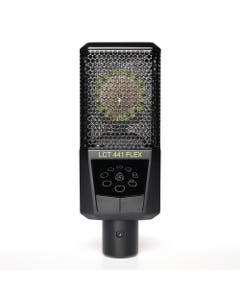
Why It’s Awesome
- Eight selectable polar patterns – including reverse polar patterns
- Budget-friendly
- Comes with accessories: wind screen, pop filter, shock mount
- Compact form factor
Teenage Engineering CM15
It might look like a toy, but the Teenage Engineering CM15 is anything but! It’s actually an incredible large-diaphragm condenser mic with a few unique twists. First, it fits in your pocket! And second, it features a rechargeable battery to power the preamp for on-the-go recordings.
You can connect the CM15 directly to your mobile device via USB or any device that accepts an 1/8-inch TRS or mini XLR cable, making it ideal for mobile studios. But despite all the “gimmicks,” the CM15 can hold its own even among the other heavy hitters on this list in terms of audio quality and recording capabilities. Pair it with the other mobile-first products from TE, and you can have a full professional-quality recording studio that fits in a backpack.
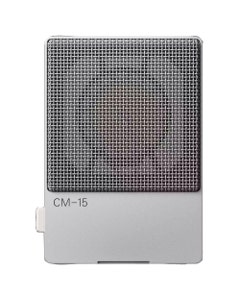
Why It’s Awesome
- Fits in your pocket
- Battery-powered preamp with 10hrs on a charge
- True large-diaphragm condenser mic
- Built-in table stand
- Mini XLR, 3.5mm, and USB output
Our Favorite Ribbon Mics
Want to keep it real smooth and warm? You can’t beat a ribbon mic. Back in the old days, people were scared of ribbon mics because they were super easy to break and didn’t handle high SPLs very well (or at all). Modern ribbon mics are a lot better and more versatile. We love to use them anywhere we want warmth and clarity, but they’re really great for anything. Pop on one a guitar cabinet, drums and overheads, and vocals, and watch them shine! They’re also good paired with another mic — especially for taming some of the harsh high-end from an SM57, for example.
Royer Labs R-121
The Royer R-121 was really responsible for the current ribbon mic revolution. They proved that you could put a ribbon in front of a blaring guitar cab without repercussion. And, in fact, it sounded great! It took out some of the harsh high-end and really smoothed out the sound, making it an instant classic for audio engineers everywhere.
The R-121 really sines on acoustic guitars or when you pair two of them together for an incredible blumlein stereo image. And for perhaps the easiest and most versatile mic setup, pair it with the SM57 using Royer’s Axe Mount. It might be the only mic setup you need!

Why It’s Awesome
- Classic ribbon warmth and smoothness
- Can handle high-SPL sources
- Ribbon not affected by heat and humidity
- Equal sensitivity from front and back of mic
- Extremely low self noise
sE Electronics X1R
You almost never see ribbon mics in the live sound arena. It’s too loud, and the temperature/humidity changes quickly kill lesser ribbon mics. The sE Electronics X1R laughed in the face of danger and quickly became a go-to for live sound engineers, mic’ing guitar cabs and drum overheads. Of course, it also sounds great in the studio.
The X1R sounds very natural and warm, just like you’d expect from a quality ribbon mic. But unlike many of the other ribbon mics on this list, it costs only around $250, making it a great choice for beginners or anyone looking to get into the ribbon mic game.

Why It’s Awesome
- Warm ribbon sound
- Handles high-SPL sources
- Great for live sound
- Budget friendly
AEA Nuvo N22
AEA is the reigning champion of ribbon mics. It’s literally all they make! And they have a ribbon mic for literally any occasion. You really can’t go wrong with any AEA mic, but we find ourself reaching for the Nuvo N22 time and time again.
It’s one of our main go-to mics for capturing acoustic guitars and drum overheads, but it also sits nicely in front of guitar cabs. John Mayer and Jack White have even used the Nuvo N22 for their guitar cabs.
The only catch is that the N22 is an active mic, which means it needs external power. Luckily, AEA thought of that, and made it work on regular-old 48V phantom power, so you can power it through your standard interface or mixer without needing a fancy ribbon preamp.
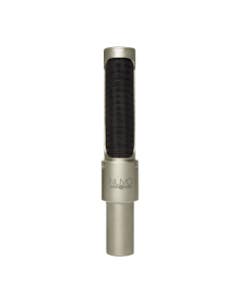
AEA Nuvo N22 Near Field Active Phantom Powered Ribbon Microphone
Special Price $1,099.00
Why It’s Awesome
- Pure aluminum ribbon for incredible clarity
- Great for close mic’ing
- Runs on standard 48V phantom power
- Bi-directional (figure 8) polar pattern
From Our Mic Locker to Your Studio
When you have access to all the gear in the world, which microphones do you choose? For us, these 13 mics make up the core of our locker and can be seen (or heard, rather) on just about every video we produce. We’ve put them through the paces, and they all get our AMS stamp of approval.
Ready to build out your mic locker? Check out some of these awesome mics and see what they can do for your recordings. And with AMS’s 0% interest financing, it’s easy to get your dream mic without blowing your budget. Try them out and let us know which ones are your favorite!

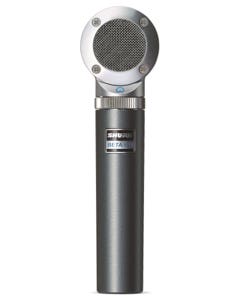
Shure Beta 181 Side Address Instrument Condenser Microphone
Special Price $519.00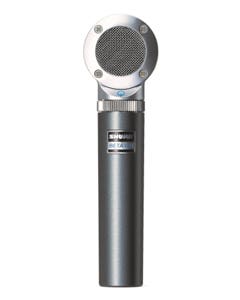
Shure Beta 181 Side Address Instrument Condenser Microphone
Special Price $569.00
Pinnacle Microphones Fat Top II Brown Active Pass
Special Price $689.00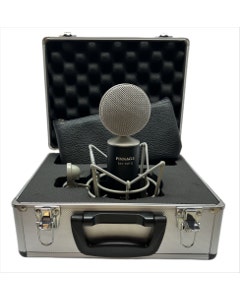
Pinnacle Microphones Fat Top II Active/Passive Ribbon Mic Black
Special Price $689.00