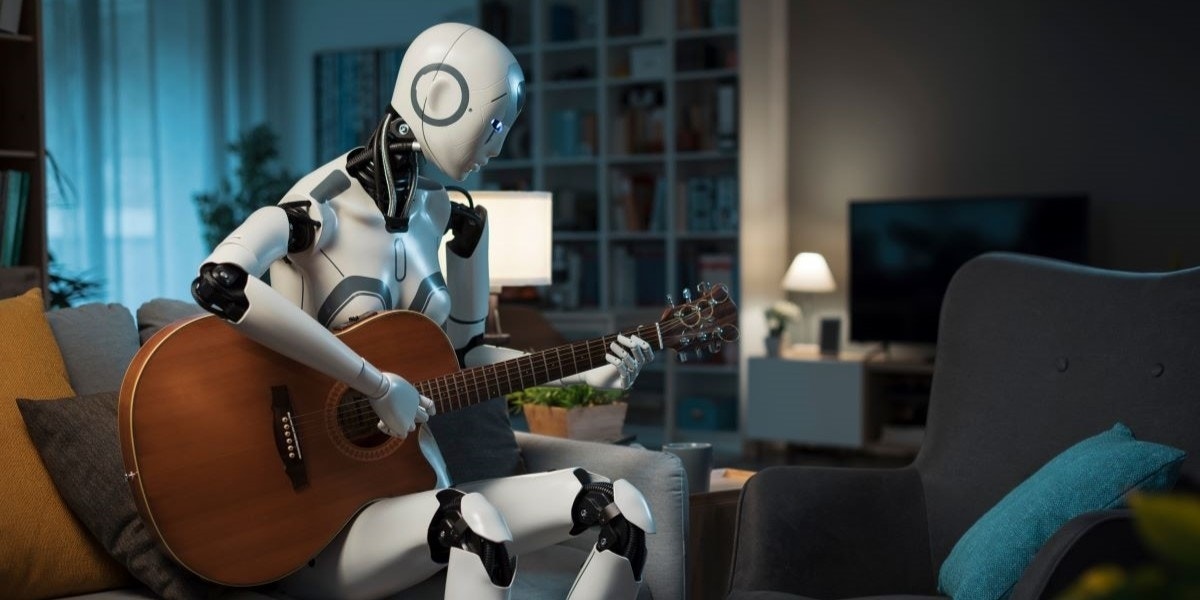
We’ve all been inundated with posts, news articles, videos, and talk about how AI is pulling a King Kong and taking the world by force. It seems like every social media app is flooded with everyone reacting, questioning if the next catchy chorus is penned by a prodigy or a processor.
It’s pretty obvious that AI and music being considered in the same sentence seems to have everyone spewing out their varying opinions, ranging from hopeful affirmatives to stronghold negatives. For listeners around the world, does AI belong in music?
In this article we’re going to get down to it and talk about some of the arguments that support it and those that are against it. Artificial intelligence is fundamentally reshaping how music is produced, distributed, and consumed, leaving artists both excited and terrified. Let’s dive in!
AI in Music
We all know about AI in the context of writing emails and making silly images. But now let’s talk about AI in the context of music production, from generative algorithms and beat-making to automated mastering tools.
AI offers beat generators that can sketch out drum grooves, chord progressions, basslines, and transitions by studying thousands of drum patterns, rhythms, and genres. They can then use this to generate new ones that fit right into an applied scenario. So, for producers having a bad case of “writer’s block,” they can bounce ideas off of AI to help tweak their songs.
For Vocal Deepfakes, AI can do voice cloning, create AI-generated harmonies, and style-match vocal takes. Clearly this brings up the whole concern around ethical and legal questions, regarding consent, ownership, and misuse.
Another use is using AI to remix and separate stems, which is basically taking a song and organize it by splitting it into its various parts: vocals, drums, bass, guitars, and other instruments. Once separated, producers can remix, rearrange, or re‑harmonize tracks that were previously locked in together.
AI in mastering can help with loudness balancing, EQ shaping, stereo widening, and compression decisions. I think this is one of the more useful tools that AI can help with because then you don’t have to worry about professionally mastering your songs. It should go without saying that nuance still matters, but you have the help of AI referencing thousands of professionally mastered tracks, so you can definitely trust this as tool in this category.
Can AI Be Creative and Original?
Okay so we know what AI does and how it’s being used in music. Now let’s actually tackle the million-dollar question: Should it? Is AI music actually creative, or is it just a brilliant pattern blender mixing up pre-existing human brilliance?
While AI is basing its actions off of pre-existing material, it can make something that hasn’t been done yet. However, what’s art without the human gifts of spontaneity, imperfections, and stories stand behind each action? Many find themselves pondering whether generating a catchy hook really equates to genuine artistic expression.
Don’t get me wrong, AI has expanded our world into new horizons with its ability to automate so much of our work, and that’s incredibly great for development. And we can continue to use this tool to support our work as we move forward. But let us not forget: It’s incredibly helpful to use as a tool but not as the main entre.
If AI bases its creations off of pre-existing musical patterns of songs, sure it can be technically “creative” generating new ideas. But original? I’d argue not so much really.
Even though we are influenced by so many patterns of existing music and maybe feel that inspiration is what prompts us into action, however, what we’re really conveying is the “mood” or “an implied vibe,” not the identical music. That lets us maintain our originality and creativity at the same time, which is the whole point of this.
AI needs pre-existing material to work, otherwise it can’t form anything on its own. It needs something to reference in order to exist. It couldn’t be original because it must be programmed and then applied to something. Humans don’t need that; it’s our gift to act from impulse.
But What About That Human Spark?
Not to get all philosophical, but the “human spark” matters in this instance. Sure, AI is creative in the sense it generates based off of patterns, as humans do, but my point is there’s really no fundamental form of life that’s moving through it. No soul. The best it could do is mimic what a human would do to give it some authenticity.
Many supporters and users of AI aim for mechanical perfection of an AI-generated track with the "happy accidents" that often define iconic songs, but at best, it’s still mimicry. We see this with Pro Tools’ “humanize” function for when the groove is “too straight” or “too perfect.” Why? Because that’s where the human spark lives, and “feeling” has the ability to convey that.
There’s this concept of vulnerability in art. Musicians connect with fans because of their shared, messy, beautiful human selves — something a server rack cannot replicate. Music is inherently about connection on some level or another, and there’s no way to escape that truth. A computer program hasn’t had it’s heart broken or felt the rush of a live crowd watching them perform — or really have any arc or story to tell. These are all parts of the human experience that are timeless and inherently valuable.
Keep the Soul in the Studio
The majority of the stance has been against AI in music, but I think it’s important not to entirely discredit its usefulness as a tool. It shouldn’t replace the artist behind the console, the performer behind the instrument, or the artist behind the story. But let’s not just resist its practical applications.
It can be a great helper for inspiring new ideas, rhythms, or chord progressions. It can help you streamline your production or even master songs. As we move further with AI, artists and musicians must find a way to adapt, and there’s a proper way to do it: Don’t treat it as the source of your creativity; use it as an assistant, while keeping your impulse and story alive as you work on your craft.
Continue working on music and listening to songs that make you feel like nothing else. Keep the creativity and the originality breathing as you develop yourself. With that mindset, viewing AI as a tool will be helpful in allowing you to navigate through all the hype and terror that the world is tossing around. It’s easier to realize that AI belonging in music might have some validity, and putting an immediate label on it without understanding its place as a helpful tool puts everyone in a guarded stance.
Drop a comment with your idea on whether you think AI belongs in music.
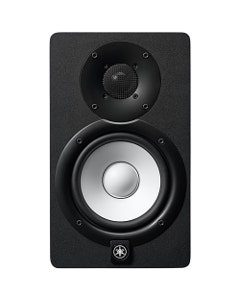
Yamaha HS5 5 Inch Powered Studio Monitor in Black
Special Price $199.99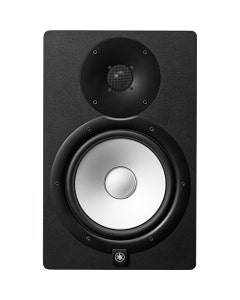
Yamaha HS8 8 Inch Powered Studio Monitor in Black
Special Price $398.99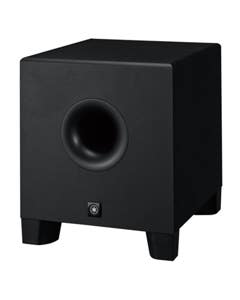
Focusrite Scarlett 18i20 Gen 4 USB Audio Interface
Special Price $769.99
Focusrite Scarlett 2i2 Gen 4 USB Audio Interface
Special Price $224.99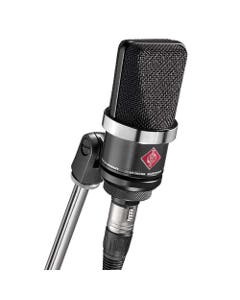

Neumann TLM103MT Large Diaphragm Cardioid Condenser Microphone Black
Special Price $1,295.00
Shure SM7dB Active Cardioid Dynamic Broadcast Microphone
Special Price $549.00