It’s a debate that’s been around as long as stringed instruments: Does the wood used in the construction of the instrument impact the tone? And even with all our technology and advances, it continues to rage on as fiercely as ever.
Well, does tonewood matter? It kinda depends…
What Is Tonewood?
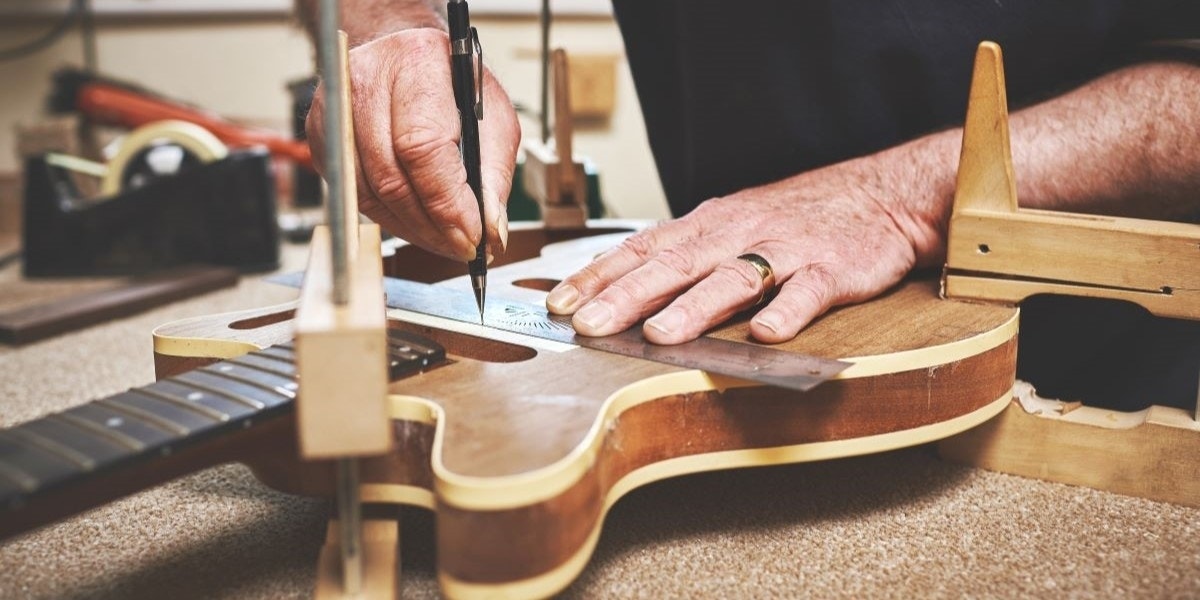
First things first: What actually is tonewood. Tonewod is the wood used to build stringed or woodwind instruments. It’s chosen for its stiffness, workability, weight, grain, structure, and a bunch of other things to make the instruments resonate a certain way — and the looks don’t hurt, either.
In the guitar world, tonewood is used to make the bodies and tops of guitars. Yes, the neck and fretboard are also made of wood, but it’s not typically called “tonewood.” That’s just regular wood, I guess.
Does Tonewood Matter for Acoustics?
Okay, the easy question first: Does tonewood matter for acoustic guitars? There’s not really much of a debate on this one because the answer is a resounding “YES!”
Really, tonewood is all there is to an acoustic guitar. It’s the part that vibrates with the strings and actually produces the sound. If a wood was stiffer or denser, it would (and does) produce a different tone compared to others that might be lighter or less dense.
Tonewood matters 100% in acoustic guitars — and I’ll be taking no questions on the matter.
Popular Acoustic Guitar Tonewoods
There are a few types of wood that work really well on acoustic guitars for their densities and ability to resonate with the strings. Here are some of the most popular acoustic guitar tonewoods and what they can do for your sound:
Spruce (tops)
Spruce is the most popular tonewood for acoustic guitar tops. It’s very lightweight, which means it resonates incredibly well for tons of crisp, articulate projection. There are many different types of spruce used for acoustic guitar construction, like Sitka, Adirondack, Englemann, and Eastern Red — among others.
Some people criticize spruce because of its boring, plain-Jane appearance. But I think the blonde tight-grained look is a classic. I’ll leave that opinion up to you.
Rosewood (back and sides)
If spruce was Bert, rosewood would be Ernie. The two acoustic tonewoods are inseparable. A spruce top with rosewood back and sides is a classic combination used in some of the most iconic guitars of all time. It’s what you’ll find in most high-end acoustics, like Martins and Taylors.
Rosewood is very dense, which is why it’s usually used for backs and sides — not tops. It doesn’t vibrate like spruce, but it makes a great, strong box to help direct sound up and out the sound hole. Its toughness produces a warm, resonate tone, which is why it’s a staple in acoustic construction.
Like spruce, there are many different varieties of rosewood, including Brazilian, East Indian, and Cocobolo.
Mahogany (top, back, sides)
Mahogany is a Jack of all trades in the acoustic guitar world because it can be used for backs, sides, AND tops. It’s lighter and less dense compared to rosewood, which gives it a brighter treble response and punchy mid-range when used for backs and sides — also typically paired with a spruce top — like in the Gibson J-45.
However, mahogany can also be used as a top, and you’ll often see full-mahogany guitars with mahogany backs, sides, and tops. And since mahogany is much stiffer and denser than spruce, it gives the guitar a much darker, warmer tone. Full-mahogany guitars are easy to spot because of their dark reddish appearance.
Sapele (top, back, sides)
Sapele hails from Africa, and it has very similar qualities to mahogany. The main difference is the price — which is why you’ll usually find sapele on mid- and entry-level guitars. It has nearly the same bright trebly with mid-range punch at a much lower cost.
Maple (back and sides)
Maple is a light-colored wood with a high density that works great for acoustic guitar backs and sides. Not only does its density give guitars more sustain and brightness, but it also looks amazing because of its diverse grain patterns — which can range from figured to flamed to everything in between.
You’ll usually find maple back and sides paired with a spruce top, like in the legendary Gibson SJ-200. It didn’t become “King of the Flattops” by accident. It’s the tonewood combo (along with its massive body) that gives it its power!
Koa (back, sides, top)
Koa is a Hawaiian wood that kinda sits in the middle ground between mahogany and rosewood in terms of density. It gives some of the midrange that you get from mahogany but it sounds a bit more rounded and smooth — like the Islands themselves.
You’ll know a guitar is Koa because it’ll look absolutely gorgeous. The grain and color is unlike any other type of wood. Taylor has an entire Koa series because it’s just that good. It’s also a popular wood for ukuleles — obviously with its Hawaiian roots.
Walnut (back and sides)
Lots of density and lots of brightness: that’s what you get with walnut. Walnut back and sides bring a strong midrange that grows warmer and softer over time. It also has a decent amount of low end.
Cedar (tops)
Cedar isn’t one of the most popular tonewoods, but its beloved by fingerpickers for its low density that gives a dark sound with plenty of overtones. It sounds really good at low volumes, which is why you’ll find it on a lot of parlor and nylon-string guitars.
Does Tonewood Matter for Electric Guitars?
Now comes the fun part… We know it matters for acoustic guitars, but does tonewood matter for electric guitars? After all, the pickups are doing most of the work, right? What effect could the wood have with an electronic tone?
This has been a source of debate for… well, ever. Some people are die-hard tonewood lovers, claiming it absolutely affects the tone of an electric guitar. Others aren’t quite sold, saying the pickups make an electric guitar’s sound and the tonewood doesn’t matter.
I’m honestly in the latter camp. I believe the signal chain and pickups do the heavy lifting, and you can swap tonewoods interchangeably without really affecting tone.
However, there is an asterisk that comes with this belief. While tonewood might not affect tone, in my humble opinion at least — like EQ, dark/bright, depth, etc. — I DO believe it affects other aspects of playability like sustain (which in my opinion doesn’t count as “tone”) and obviously weight. Plus, it can completely change the look of a guitar too, which is also important.
I’ll also admit that I’m not an audiophile. I’ve played guitar for 17 years and built guitars for 13, so I’ve been around the block. But perhaps my ears just aren’t tuned enough to hear the differences between a guitar made with ash and a guitar made with mahogany if they have the same pickups and are run through the same amp.
In my experience, the signal chain (pedals, amp, cabinet) make up the grand majority of a guitar’s tone. The pickups are the second-most impactful part. And everything else is kinda lumped together at the bottom 1% (maybe) of tone. If it was up to me, I’d just call it “wood.”
Popular Electric Guitar Tonewoods
Of course, there are people out there who disagree and think tonewood makes a huge difference in an electric guitar’s tone — and I certainly don’t want to write them off. One of those people is Paul Reed Smith who has waaaay more experience than me when it comes to both playing, building, and listening (and probably wants to fistfight me for saying no). So maybe there is something to it?
And if you want to do some experimenting for yourself, here are the general thoughts on what different tonewoods can do for electric guitars:
Alder
Alder is one of the most common types of electric guitar tonewoods. It’s thought to have a very balanced tone with a pronounced upper-midrange. It’s also on the lightweight side, making it nice for marathon gigs or jam sessions.
Alder is the wood of choice for most Fender guitars.
Ash
Ash comes in two main flavors: Soft Ash, which is more commonly known as “Swamp Ash” and Hard Ash. Both have a very resonant, balanced tone that’s similar to alder. The main difference comes in the scooped midrange.
Swamp ash is also lighter than hard ash, but because hard ash is much denser (and therefore heavier), it also has better sustain.
Swamp ash is my personal favorite because of the grain — not because of the tone since I don’t believe in that sort of thing (lol). It has super deep, big, swooping grain patterns that look really cool in different kinds of finishes. PRS uses a lot of ash — and I especially like anything in their doghair finish that really shows off the grain.
Mahogany
Mahogany, what can’t you do with it? Not only is it a good tonewood for acoustics, you can use it in electrics, too! Mahogany is just super dense and super tough. It’s great for bringing out a warmer tone with amazing bass and low-mid tones.
However, since mahogany is so dense and tough, it’s also heavy — but it produces excellent sustain. Mahogany has been a favorite for Gibson since the beginning. It’s what makes their guitars so darn heavy! And they especially like to use it as a back paired with…
Maple
Maple adds all sorts of brightness to a guitar’s tone. That’s why it pairs so well with the dark and broody mahogany. You’ll typically find guitars with maple tops or caps and a different wood for the main body, but there are some out there with full-maple constructions — though they’re usually out of your price range. You’ll know when a guitar has a maple top because of the incredible grain that comes in all sorts of patterns like flamed, figured, or quilted.
Korina
Before Gibson landed on mahogany as their tonewood of choice, there was korina. Korina is comparable to mahogany in terms of weight and density, and you’ll get very similar bass and low-end response. However, many tonewood enthusiasts say that korina has a “sweeter” midrange.
Gibson still uses korina in some of their models like the Flying V and Explorer. Reverend is also a huge fan of korina, and they use it for nearly all their guitars.
You might find other electric guitar tonewoods out in the wild, but these are the heavy hitters.
Now It’s Your Turn: Does Tonewood REALLY Matter?
In my opinion, acoustics YES, electrics eh. But that’s just my opinion. There are plenty of people out there who may have much better ears than me (or at least want to pretend they do) and do actually hear a difference between ash, alder, and mahogany in an electric guitar, all other things equal. What do you think?
The only way to really learn about your tonewood preferences is to try them all! And there’s no better place to do that than right here at American Musical Supply. Now get to testing!
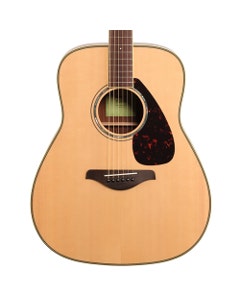
Yamaha FG830 Folk Acoustic with Solid Spruce Top
Special Price $449.99



Schecter Solo II SLS Elite Evil Twin Electric Guitar
Special Price $1,399.00
ESP LTD MH1000B Baritone Electric Guitar Black Satin
Special Price $1,199.00