The music of 1986 brought along with it the cutting-edge synthesizers, drum machines, digital recording technology, and elite session musicians that all came together to create songs that dominated the charts and managed to stick around for years to come. From pop and rock to R&B and adult contemporary, that year’s biggest hits were shaped just as much by the behind-the-scenes gear as by the artists themselves.
Since we’re celebrating 40 years of AMS, we figured it’s only appropriate to bring it back to when it all started. In this article, we'll revisit some of the top songs of 1986 and take a closer look at the musicians and gear that helped define the sound of an unforgettable year.
“Walk of Life” – Dire Straits
Most of you have probably heard “Walk of Life” by Dire Straits without realizing it, especially considering the iconic Hammond B3 organ melody catches you right from the start. To give some background, Mark Knopfler was the lead guitarist and singer for the group. As the main songwriter, he was mainly responsible for bringing them to massive success in the late ‘70s and ‘80s.
When Brother in Arms came out in 1985, “Walk of Life” was released as a single, which highlights the journey of life through the lens of a dedicated street musician. This song became a commercial hit, reaching the top 10 in both the UK and US charts for 1986. It serves as a great example of rock and roll blending with elements of country music in a cheerful, upbeat style.
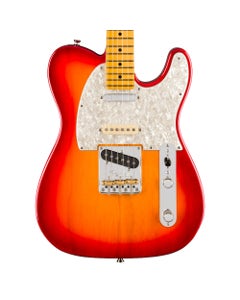
Let’s talk about some of the gear and their modern-day equivalents. Knopfler used both a Gibson Les Paul and a Fender Telecaster into a Marshall amp head and cabinet with some slapback delay/echo effects on it. If you listen to the song, you can clearly hear the twangy guitar sit on top in the mix above the other instruments, and it definitely hits the nail on that chickin’ pickin’, treble-focused sound.

If you want a good, modern slapback delay pedal that’ll help you achieve that country-influenced guitar sound, check out the JHS Milkman Echo pedal. I use it on my board since it really helps give the guitar some character and stand out without worrying about the echo getting in your way.
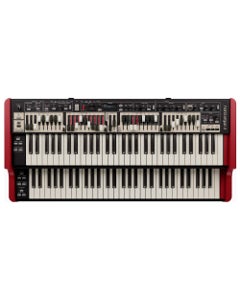
What about the keyboard and organ sounds? Well, you can get an organ patch almost identical to the recording with a Nord Organ 3 Dual Manual Combo Organ. Put on a Leslie patch or create your own and EQ it how you want, and there ya go! On the recording, it’s a Hammond B3 run through a Leslie 147 cabinet that’s slightly overdriven.
And if you really had to know, it was a Shure SM58 Dynamic Vocal Microphone that Mark used on his vocals in the studio. Classic pick, almost everyone has a spare SM57 or SM58 on them. They’re part of the standard.
If you're a Benchwarmers fan, listen out for “Walk of Life” playing as Gus nudges Clark and Richie to step up during the game, instead of leaving everything to him. Props to the creators for choosing the right song for that scene. It clicks perfectly.
“Broken Wings” – Mr. Mister
“Broken Wings” by Mr. Mister was an incredible pop rock meets new wave ballad which reached #1 on the Billboard Hot 100 list. John Lang was the vocalist and lyricist who was inspired by Kahlil Gibran’s 1912 novel Broken Wings, which told a story about a love that was doomed by social convention. The song carries a note of heartbreak and introduces themes of healing, guidance, and rebirth.
In this song, there’s a lot of production and textures going on: layers of synthesizers, delayed guitars, fretless bass, and drums. Given the dense production, one of the cool notes about this arrangement is that it starts off slowly with a cinematic and mysterious mood and then builds up to a fuller, impacting chorus.

If you want to nail the synthesizers being used back then, you can’t go wrong with a Sequential Prophet 6 Synthesizer or a Yamaha MODX M7 Synthesizer. Steve George, the band’s keyboardist, was using a Yamaha DX7 and a Sequential Circuits Prophet 600 synthesizer to get those synth sounds. Surprisingly, the bass actually wasn’t played on a bass; it was from a synthesizer.
The band’s guitarist, Steve Farris, used a Fender Stratocaster and a Gibson Les Paul Standard Gold Top into a chorus ensemble pedal with tons of delay. The original was a Boss Chorus Ensemble, so going with an updated one like the Boss CE-5 Chorus Ensemble Pedal will do the trick. You can use a Boss HM-2 Heavy Metal pedal to get the slightly overdriven guitar melody covered towards the end.
Although Pat Mastelotto was the band’s drummer and percussionist at the time of the recording, a drum machine was programmed for most of the song. The “real” drums don’t come in until about halfway through, and they fit right on top of the programmed hi-hat. “Broken Wings” is a great song and great example of the iconic ‘80s production.
“Talk to Me” – Stevie Nicks
Talking about Stevie Nicks outside of Fleetwood Mac might seem unfamiliar considering all the gems that came from that group. But Stevie Nicks proved that she could be just as successful outside of a group, as much as in a group, with “Talk to Me.”
Originally the song was written by Chas Sanford, and then when Stevie Nicks recorded the song, Jimmy Lovine was the producer running the show. Sandford recorded most of the instruments on the song, and originally Nicks hated it because of her trouble with handling the vocal parts.
With Sandford covering the guitars, both 6-string and 12-string guitars were used in the recording process. The nice thing about 12-string acoustic is the octave higher and doubling effect that they produce, giving you a full, chorusy sound that just adds so much flavor to a song.
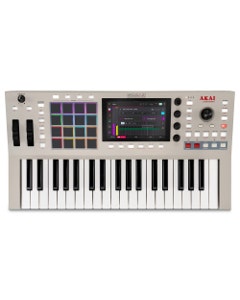
The Enoniq Mirage was very popular back in the day and was one of the more affordable sampler-synthesizers around. Many recording studios had one of these around for artists and producers to use.
Nowadays with technology being so advanced, you can get the same capabilities relatively easily and without spending a ton of money. The Akai MPC Key 37 Gen 2 Synthesizer is a great equivalent that you can use to run a variety of synth sounds sample, craft beats, imitate wind instruments, and much more, all in one unit. Easy peasy.
Capturing the nuance and character of vocals is the utmost importance in the recording world — especially if your vocalist is Stevie Nicks. If you want a good microphone that’s going get it done, the Sennheiser MD 441 Microphone is a great choice. It’s one of the most accurate and versatile dynamic microphones around, and it’s been around since the ‘70s, so it’s got the story to back up its performance. With a voice like Stevie Nicks, it’s only right that the producer uses a microphone that can capture all the details that come from a legend.
“Tonight She Comes” – The Cars
Ric Ocasek, The Cars’ main songwriter, wrote “Tonight She Comes,” and it reached the top on Billboard’s Top Rock Tracks chart for three weeks. This song was the final Top 10 hit for The Cars, making it a very big milestone for the band. It screams new wave with those glossy synthesizers, clean hook-based production, a memorable guitar solo by Elliot Easton, and Ric Ocasek’s cool, detached vocal style.
If you want to nail the fast and articulate phrasing of Easton’s guitar playing, go with a Kramer Guitar and add some light overdrive, chorus, and delay. For overdrive you can use Boss SD-1 Super Overdrive Pedal to give you enough bite to nail the guitar layers and solo. Use a Boss DC-2W Waza Craft Dimension C Pedal and a Boss DD-8 Digital Delay to sprinkle into the mix for the rhythm guitar layers in the back.
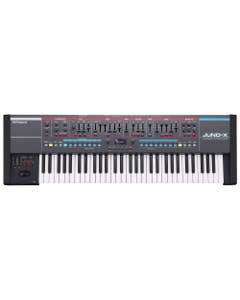
You can hit those classic ‘80s synth sounds with a Roland Juno X Synthesizer or a Yamaha MODX M8 Keyboard Synthesizer. If you pull up a classic saw or polysynth patch on your keyboard, you’ll find how easy it is to recreate those iconic and irresistibly fun-to-play new wave synth sounds.
In your production setting, be sure to use compression to make everything clear in the mix. Whether you’re running Pro Tools or Logic, you can add these during or after. It comes down to whether you like using outboard gear or plugins — or even both. But recreating a song like this is pretty straightforward since the bass, drums, and vocals are standard in this one. Use what sounds good and go from there. This song is a classic!
“Small Town” – John Cougar Mellencamp
“Small Town” is one of those classics that everyone knows whether they realize it or not. John “Cougar” Mellencamp was projected to be similar to a Bruce Springsteen, focusing on that classic-rock-meets-singer-songwriter style, bringing that rootsy feeling without being labeled as country.
The town in “Small Town” was inspired by Mellencamp’s upbringing in Seymour, Indiana, and was written in his laundry room, explaining that a meaningful life didn’t require living in New York or Los Angeles.

Ludwig LM404C 5.5x14 Acrolite 10 Lug Snare Drum
Special Price $499.00
Two instruments, besides obviously Mellencamp’s vocals, really stand out in this song, and that’s the guitars and drums. A huge part of the song comes from drummer Kenny Aronoff’s snare drum, which smacks the very bright, tightly-tuned, and aggressive beat that’s responsible for driving the entire momentum. Want a good snare that can give you that same fullness? Go with a 14”x5” snare to give you that high-tuned sound and ask the engineer/mixer to give you a little gated reverb on top. Either a Ludwig LM404C Acrolite 10 Lug Snare or a Drum Workshop Design Series Snare will work nicely!
Here you can cover both the acoustic and electric guitars with a Martin 00018 Acoustic Guitar and a Les Paul Electric Guitar. John Mellencamp and his band would run their guitars through a Fender Twin Reverb (or Fender Tone Master Amp if you want a modern, lighter-weight solution) which is great for giving you the clarity you need for the roots-based style.
One of the great callouts of this song is that the musicianship feels tight. The production meets the technical standards of a major-label hit and yet it never lost the feeling of just a band playing together. It feels like they’re there playing it to you, which contributed to how timeless it still feels today. It’s unmistakenly natural and rooted in American life, making it a great example for the songwriters even today.
“I Miss You” – Klymaxx
“I Miss You” is one of those songs that doesn’t carry a whole lot of flash and yet it was a hit. Klymaxx was known for funkier, more upbeat material, but this track slowed it all down and let the songwriting do most of the work.
Written by keyboardist Lynn Malsby, it's basically a classic breakup song of realizing someone is gone and wishing they were still around. “I Miss You” became Klymaxx's biggest hit, reaching No. 5 on the Billboard Hot 100 and earned significant airplay on the pop and adult contemporary radio stations.
You can hear the spacious digital reverb on the vocals and drums, along with subtle chorus effects that give the keyboards and guitars that dreamy-esque color. The drums and percussion are pretty tight and controlled. Add some silky background harmonies, and you’re good to go.
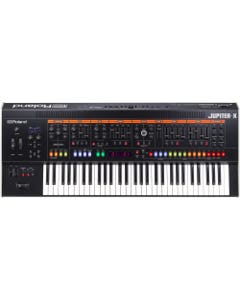
This song is built on lush layers of soft synth pads and electric piano sounds that immediately place it in the mid-1980s. If you used either a Roland Jupiter X Keyboard, Roland Juno X Synthesizer, or a Yamaha MODX M8 Keyboard, you’ll be right there in the same ballpark.
Cheryl Cooley's guitar stays pretty much in the background, adding smaller clean fills and texture moments, avoiding the spotlight. The Fender Player II Modified Strat would be a great choice to handle most of the guitar sounds that came out of the ‘80s.
Joyce "Fenderella" Irby's bass playing quietly holds everything together under the keyboards. Check out an Ernie Ball Music Man Stingray or Fender Precision Bass to dial in the tones you hear on the track.
This one’s really a great song with that classic ‘80s production, carrying a theme that everyone can or has related to at some point in their life. It’s probably why people still remember this song nearly 40 years later.
“Alive and Kicking” – Simple Minds
Coming right after "Don't You (Forget About Me)," there was plenty of pressure on Simple Minds to prove they weren't another one-hit wonder. “Alive and Kicking” was released and climbed all the way to No. 3 on the Billboard Hot 100 and topped the rock chart, which is pretty impressive. A lot of bands struggled to follow up their big hits, but Simple Minds somehow came back with one that many people arguably liked even more.
Charlie Burchill's guitar parts are solid, but it’s just layering clean, chimey guitar sounds with delay and ambience, almost like it’s another keyboard. Then Mick MacNeil comes in with those rich synth and piano layers that give the whole song its widescreen feel.
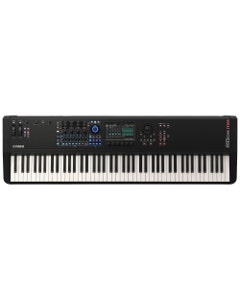
While the Yamaha DX7 was one of the defining keyboards of the ‘80s, finding one in good condition nowadays might have you searching a little bit — or paying a little bit of money. Some good modern alternatives might be Roland Jupiter X Keyboard, Yamaha MODX M8 Keyboard, or the Oberheim OBX8 Analog Synthesizer which has some really nice options for sounds.
Jimmy Iovine and Bob Clearmountain mixed those huge drums, big reverbs, and wall-to-wall textures that defined arena rock back in ‘85/’86. But unlike a lot of records from that era, it doesn't sound too dated or overcooked. It's definitely one of those where headphones are worth it because there are little details hiding everywhere.
Sure, the production is huge, but underneath it all is a really well-written song with a strong melody, big chorus, great band, and just enough studio magic to make it feel BIG. That chart run is a big part of the song's legacy. It proved that Simple Minds' success wasn't just tied to The Breakfast Club soundtrack.
“That’s What Friends Are For” – Dionne & Friends
If you listen to “That’s What Friends Are For,” one thing that stands out is how un-‘80s it feels compared to a lot of other hits from that time. The single became a massive hit, topping the Billboard Hot 100 for four weeks, the adult contemporary chart for two weeks, and the soul chart for three weeks, ultimately becoming Billboard’s number-one single of 1986.
Instead of the big, gated drums and flashy synth hooks, producers Burt Bacharach and Carole Bayer Sager kept things classy and let the vocals take the spotlight.
The arrangement is built around smooth keyboards, soft synth pads, bass, and drums, creating a warm backdrop for Dionne Warwick and her special guests — Elton John, Gladys Knight, and Stevie Wonder — to trade lines and harmonies.
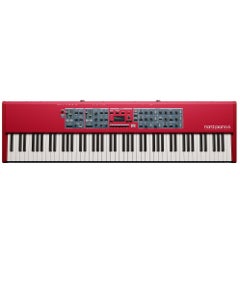
Elton John played the piano on this song, so using a Nord Piano 6 Piano or a Roland RD2000 EX Piano would be a good starting point, along with a Roland Juno X Synthesizer to get a soft synth pad patch. Stevie Wonder played the Harmonica.
Contemporary footage from the recording sessions shows the singers gathered around large-diaphragm studio microphones in a professional multitrack recording environment, reflecting the premium analog recording techniques that were still standard before digital workstations became widespread. If you want some large-diaphragm microphones that were similar to the ones on this recording, consider the Electro-Voice RE320 or Shure Super 55 Deluxe.
The ensemble-style performance layout distinguishes it from many more heavily processed pop productions of the era, where layers were added on top of each other in separate takes. This song proves that sometimes the most important thing on a hit record is a room full of incredible musicians and engineers who know when to step aside and not overdo it.
“Party All the Time” – Eddie Murphy
Here's a fun piece of music trivia that's almost as good as the song itself: "Party All the Time" wasn't just any Rick James production — it was born out of a snowstorm in Buffalo, NY, when Eddie Murphy was essentially snowed in at Rick James' studio for a few days. What do you do when you're stuck inside with one of the funkiest musicians alive? You write a hit, apparently.

And what a hit it was. Rick James loaded the track with these bright synthesizers, a punchy drum machine, layered percussion rhythms, and funky guitars — a perfectly packaged track of '80s pop-funk. It shot straight to the top of the charts, and in the process, proved that Eddie Murphy wasn't just a comedy genius — the man could actually make music, too.
The Alesis SR16 Drum Machine will give you plenty of options of patches that can replicate those sounds you get from the ‘80s.
We mentioned earlier that a good substitute for the Yamaha DX7, which was so prominent back then, is the Yamaha MODX M8 Keyboard. The Roland Juno 106 has its modern day equivalent with the Roland Juno X 61-Key Synthesizer and the Sequential Prophet 5, updating and adding onto the famous synth sounds you can hear on those ‘80s singles.
A Fender Stratocaster screams funk more than any other guitar out there, and add a little chorus with the Boss CE-5 Stereo Chorus Ensemble pedal. I can already hear the ‘80s rolling in as we list off the gear!
A lot of people remember “Party All the Time” as a novelty hit because Eddie Murphy was already one of the biggest comedians in the world, but the song was an actual hit. It climbed all the way to No. 2 on the Billboard Hot 100 where it spent three weeks stuck behind Lionel Richie's “Say You, Say Me,” which is where we’re heading next.
“Say You, Say Me” – Lionel Richie
Lionel Richie’s song “Say You, Say Me” is another example of a hit that dominated the charts without giving into the realm of ‘80s cheese and flashiness. Lionel Richie wrote and performed this song for the movie White Nights, and it reached #1 on the Billboard Hot 100 and topped the R&B and Adult Contemporary charts, selling over a million copies in the U.S. It also won the Academy Award for Best Original Song in 1986, cementing its place as one of the biggest and most successful ballads of the decade.
Lionel Richie and his longtime collaborator James Anthony Carmichael kept the production clean but effective, while Steve Lukather handled guitar, Michael Boddicker brought the Yamaha DX7, Greg Phillinganes covered keyboards and Minimoog bass, and drummer J.R. Robinson locked down the rhythm section.
The Yamaha DX7 was used on this by Michael Boddicker, and you can’t go wrong replicating it with the Yamaha MODX M8 Keyboard. You can use a Moog Grandmother Analog Synthesizer to cover what Greg Phillinganes was doing for the bass. This gives you the ability to cover those layers that were done in the performance and production stages. If you want to come close to the samples that the LinnDrum LM-1 had, you can go with the Alesis SR16 Drum Machine or stretch it further with the Roland TR08 Drum Machine.
If you want to come close to Lukather’s setup, try starting with a Fender American Ultra II Strat HSS Guitar or a Ibanez Roadstar guitar into a Soldano amp. He was playing a Valley Arts guitar through a rack made by Custom Electronics, but when you hear what the Soldano amp sounds like, you’ll realize you’re at least in the same neighborhood as Lukather was with his tone.
A lot of the vocal parts were reportedly recorded in Richie's living room. Not exactly Abbey Road, but hey, it worked. It was a prime example that songwriting mattered way more than a state-of-the-art recording studio.
What makes this recording special isn't necessarily the impressive list of legendary session musicians. Again, it was all about the ensemble: keyboards, synth textures, rhythm section, and harmony vocals working together to make Richie sound perfect. It genuinely sounds like a well-crafted and produced song that withstands the test of time.
40 Years of Gear and Still Going
That wraps up our look at the chart-topping songs of 1986 and the gear behind their sound. As we celebrate AMS’s 40th Anniversary, it felt like the perfect time to look back at the hits that filled the airwaves that year. If you have any questions about music gear, give us a call at 800-458-4076. Our gear experts are here to walk you through what to look for, what to listen for, and how to find the right fit for your needs. We’re excited to help musicians make music for another 40 years!