
American Musical Supply was founded in 1986, exactly 40 years ago! Oh, how the time flies… And a lot has happened in the music world since AMS first started shipping gear directly to your door. Let’s take a look back over the last four decades to see what music-changing innovations took place since 1986 to celebrate AMS’s 40th Anniversary.
Innovations of the 1980s
You might remember the big hair and synthesizers, but there was a lot more going on in the 1980s that would shape the very fabric of the music industry and the way artists create long into the future. Many of the innovations are still effecting change today!
MIDI
Musical Instrument Digital Interface (or MIDI if you don’t feel like remembering all that) is one of the most powerful tools used by musicians today, and it all started back in the ‘80s. It’s essentially a way for different electronic instruments to talk to one another. If you press a key on a keyboard or controller, it can trigger a sound on a different piece of gear.
MIDI opened up all kinds of capabilities for artists in the ‘80s and beyond. Now, they could build entire racks of gear to create compositions and sounds that people living in the pre-MIDI world could only dream of. Today, you can still find gear with classic 5-prong MIDI I/O, but most instruments now transfer MIDI data through USB.
Affordable Synths
There’s a reason synthesizers took over the airwaves in the 1980s: They finally became affordable!
Synthesizers as we know them today have been around since the 1960s, but they weren’t the most portable or affordable to say the least. Some of them, like early Moog models, took up entire rooms! And I can’t even imagine what it would cost not just to buy one but to move it from gig to gig…
In the 1970s, synths got smaller and polyphony took their capabilities to the next level. But they still weren’t cheap. In 1978 when it released, the Sequential Circuits Prophet-5, which was one of the top synths of the time, retailed for $3,995. Adjusted for inflation, that would be roughly $20,500 in 2026! Needless to say, you wouldn’t find one in a bedroom studio or gigging at your local coffeeshop.
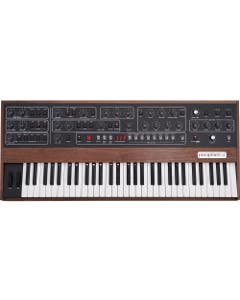
Sequential Prophet 5 Analog Synthesizer Keyboard
Special Price $3,699.99
Side note: Funny enough, you can buy a brand-new Sequential Prophet-5 for less than it cost in 1978. New ones retail for just over $3,500.
However, the 1980s brought new innovations to the synth world, namely digital sound modeling. Digitization took the analog sounds from previous synthesizers and made them smaller, lighter, and cheaper. Musicians of all levels and budgets could make crazy synth sounds to create new genre-breaking music without selling a kidney (or two). Paired with the other new innovation, MIDI, it’s really no wonder synths took over the world in the ‘80s.
Programmable Drum Machines
It’s hard to get drummers to show up to band practice, and I guess the musicians of the ‘80s officially had enough because this is also the decade of the drum machine.
Sure, drum machines had technically been around since the ‘30s — if you count clicks and bumps “drums.” But the ‘80s is really when the drum machine rose to power with the introduction of the programmable drum machine: the legendary Roland TR-808.

No longer were musicians stuck with the same couple presets created at the factory. Now, they could program their own beats! And this innovation led to tons of pop-tastic beats that ruled the airwaves for decades to come. Today, there’s hardly such a thing as a non-programmable drum machine. And Roland is still at the forefront of the drum machine movement with the latest iteration of the iconic TR series, the TR-1000.
Innovations of the 1990s
As AMS celebrated its fourth birthday, the decade rolled around. It was now the ‘90s — which was a lovely decade for me, at least! (I feel old).
But besides the creation of one of the most awesome, amazing, music-gear writers ever (humbly), it also spawned a heap of new music gear that changed the world forever! Innovation is always just around the corner.
Digital Audio Workstations (DAWs)
Perhaps the biggest musical innovation of the ‘90s was the Digital Audio Workstation (DAW). It was a huge step up from the scissors-and-tape days of the past. Now, engineers could record and mix on computers! It took the required studio space from a large, project-specific room to the size of a desktop computer — which might have been large back then, but still not as large as studios used to be.
Technically, DAWs existed prior to 1990. In 1977 there was Soundstream, but it ran on a computer large enough to fill a box truck and had very basic functions. And in the ‘80s a few more digital workstations emerged, but again they didn’t have the quality or feature-set of professional tape-based studios of the day. However, in the early ‘90s, Apple Macintosh and Microsoft had created computers that anyone could own in their home. And along with the personal computer came Cubase, what many consider to be the first “modern” DAW.
It allowed 32 tracks of audio and introduced third-party effects. Now DAWs could compete with tape, and the music production world just got a lot more accessible.
It wasn’t long before others joined the mix. Pro Tools in its modern iteration emerged in 1991. Logic Pro came around in 1993. And we were off to the digital races! Today, almost everyone uses a Digital Audio Workstation. I’m sure you can find some recording studio still holding onto tape, but I’d venture a guess to say they’re either very old — or at least a bit of a hipster…
Rectifier Amps
Since a lot of the music innovations between 1986 and 2026 come from digital advancements, I thought it’d only be fitting to throw in an analog innovation — and one that I personally enjoy. In 1992, the reign of the Mesa Boogie Dual Rectifier began.
A lot of amps have become legends over time. Marshall JCMs, Fender Tweeds, VOX ACs, they all hold special places in music history. But in the ‘90s, it was all about that gain, and only one amp could deliver enough of it. The Dual Rectifier was Mesa’s response to other high-gain amp makers like Marshall, Bogner, and Soldano. While they were busy chasing British tones, Mesa went a different direction they called “modified British.”

Instead of going all-tube all the time, the Dual Rectifier used both tubes and silicon diode (solid state) power amps, giving players the tube saturation, warmth, and sag with the quick attack of solid state. Mesa also packed the Dual Rec with tons of channels and tone-shaping options, way more than the competition.
Bands like Alice in Chains, Soundgarden, Foo Fighters, Bush, Blink 182, Korn, Metallica, Korn, Linkin Park, Limp Bizkit — basically anyone who wanted to go as heavy as possible — all flocked to the Dual Rectifier to get a taste of what has become known as “modern high-gain.” It essentially created a new genre of guitar playing! Other amp brands started to emulate the Dual Rec's modern high-gain to a new generation of guitarists.
Pitch Correction
T-Pain wouldn’t have had a career without this ‘90s innovation. That’s right, everyone’s favorite pitch-corrector, AutoTune, was released in 1997, helping bad singers become good singers and good singers sound like really cool robots.
Tracking pitches was nothing new in the ‘90s. Eventide had been doing it for decades. But AutoTune was the first to do it really well. In fact, the creator of AutoTune came up with a brand-new algorithm to simplify the millions of calculations required to track and adjust pitch into just four. Boom, all of a sudden you could pitch correct in real time!
AutoTune was released in September of 1997 and by 1998 it was taking over the airwaves. Cher’s “Believe” was the first commercial recording to use AutoTune, and it was so popular that many people started calling it the “Cher Effect.” It only grew from there, and now it’s used in almost every genre.
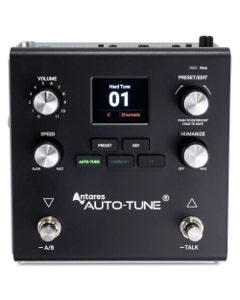
Today, you can still get the original AutoTune sound — and it still sounds as cool as ever. But pitch correction has gotten even better based on the original algorithms, leading to the more natural-sounding and precise Melodyne and even bleeding into instrument effects.
Innovations of the 2000s
This time when the calendar flipped over, it was to a new millennium. And since the world didn’t end at Y2K, people continued to push the boundaries of what was possible in the music world, leading to heaps of new innovations in the 2000s.
Digital File Sharing
Ahh the era of “free” music and angry Metallica. The early 2000s brought with it one major innovation that not only changed the way people collaborate and create music but also the way they enjoy it. Digital file sharing first sprouted up in mid-1999 with a little company called Napster. But by the 2000s, it was in full swing.
Instead of going to a physical store to buy CDs and carry around ridiculous bags full of them, you could simply hit the “Download” button and listen to all your songs on your computer — or burn them to CDs, as we all used to do.
Beyond digital downloads, online file sharing also helped musicians create and collaborate. Now, you could record something on your fancy new DAW and send it to another musician across the world in an instant, where they could listen to it, record their parts, and send it back. It was a new era of musical collaboration!
Of course, there was a bit of a learning curve with this one. Some of the sites weren’t the safest *cough cough Limewire. But it’s hard to deny the impact digital file sharing has had on the music world. Today, most music is digitally downloaded, and we all have the 2000s to thank for it.
Portable Digital Music Players
Now that people were digitally downloading music, what could you play it on? It’s not like you could carry your computer around everywhere to listen to music. You’d need a smaller, portable device that could hold MP3 files.
Well, the iPod hit the shelves in 2001. I can still see the commercials… Obviously, it was a huge hit with people everywhere and changed the way we listen to music forever. It effectively ended the “album era” of popular music and pushed artists and labels to favor the single — for better or worse.
Virtual Studio Technology Instruments
Who needs to have giant racks of analog gear to make recordings sound good? Well, after the year 2000… nobody! Because at the end of 1999, Cubase updated their Virtual Studio Technology to introduce MIDI-powered instrument plugins.
Rather than buying a $4,000 vintage synth that takes up half a room to sound good, you could simply download a plugin into your DAW and make a MIDI controller sound exactly like it. Updated VSTi technology brought about standalone software synthesizers, samplers, and drum machines, which are all still recording staples today! Many beats and instruments you hear in modern music weren’t actually made by real instruments; they’re all VSTi that live inside a producer’s DAW.
Innovations of the 2010s
Since digital processing didn’t seem to be going away any time soon, the music industry simply pushed harder in the 2010s, leading to even more innovations that helped musicians create. They don’t take a rest, these guys!
(Good) Amp Modeling
Okay fine, amp modeling had been around for a while before 2010. The Rockman came out in 1982 and the SansAmp Classic came out in 1989. But something happened in 2010s that changed amp modeling forever and made it so good that pros started using it.
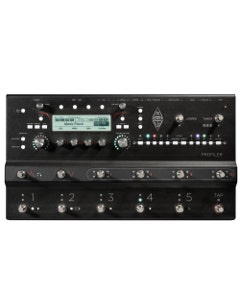
Kemper Profiler Stage MK2 Floorboard Amp Modeler
Special Price $1,649.00
In 2011, Kemper developed what they called “profiling” technology. Rather than hard coding an amp model using pitch tracking — as modelers had done previously — Kemper sent test signals through real amps and used a bunch of fancy math to literally clone the exact sound and feel. The result is a much more realistic amp model that was pretty hard to distinguish from the real deal. They actually sounded good!
Profiling technology instantly took off, and it wasn’t long before other brands started introducing their own profiling modelers, with the DSP-powered Line 6 Helix coming out in 2015 and Neural DSP plugins starting to roll out in 2016.
Today, amp modelers are all the rage. They sound so good that many hardcore analog-purists like Mark Tremonti and Joe Bonamassa have started to consider adding modelers to their rigs.
MIDI Polyphonic Expression (MPE)
MIDI is definitely cool. The way you can press a button on a physical keyboard and make a sound come out of a virtual instrument pushed music in directions people didn’t know it could go. But musicians still wanted more. They wanted their instruments to have feeling with dynamics, vibrato, and slides. Well, the 2010s delivered with MIDI Polyphonic Expression (MPE).
In the mid-2010s, a company called ROLI came out with the Seaboard. It was a squishy silicon keyboard designed to give musicians expressive capabilities that no other keyboard could. Players could press harder or softer and slide or wiggle their fingers to adjust certain parameters as they played. This became known as aftertouch. Well, they also wanted these parameters to work via MIDI, so they developed MPE as a way to communicate aftertouch to other gear.
By 2018, MPE was officially adopted by the MIDI Manufacturer’s Association, bringing more life and expression to virtual instruments than ever before. Now when you play drum pads or press piano keys, your plugins can actually sense the dynamics, leading to more realistic and human-sounding virtual instruments.
Downsized Studio-Quality Gear
Small instruments are essentially just toys, right? There’s no way you could have a real instrument that fits in your backpack or pocket. That might have been true up until the 2010s! Because with improved digital processing and smaller memory chips comes the ability to pack “toys” with real horsepower.
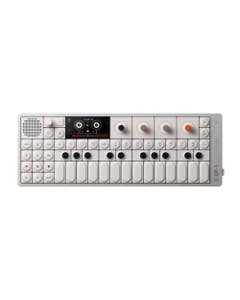
One of the earliest and best examples of this micro studio-quality gear is the Teenage Engineering OP-1 Synthesizer, which rolled out in 2011. 11 synth engines, 6-voice polyphony, onboard sampler, OLED display — this thing was a beast, even by full-sized standards. But the crazy part was that it could almost fit in your pocket!
No longer were small instruments considered toys. They could be the real deal, leading to a revolution of portability in the music world. The OP-1 was so good that it’s still available today, and it’s still considered to be a VERY good synthesizer.
Innovations of the 2020s
We might only be a little over halfway through the 2020s, but there have been some incredible advancements in music technology — and really just technology as a whole. Things are getting smaller, more powerful, and more automated than ever before, completely changing the way musicians make music.
Artificial Intelligence
Duh, right? In the 2020s AI changed almost everything about everything. It’s seemingly all anyone can ever talk about! And besides taking everyone’s job and guzzling water, it has also done some amazing things in the music world.
One of the top things AI has done for music is stem separation. It used to take audio engineers hours to dissect songs and separate vocals from instruments from drums. Now, they can do it with a click of a button. DJs have especially enjoyed this ability, making it faster and easier than ever before to create awesome mashups on the fly.
It has also revolutionized mixing and mastering, creating automated tools that set levels, adjust EQ, clean up frequencies, and a whole bunch of other things. These tools opened up a new era of bedroom artist, making professional tools more accessible than ever before.
Of course, there have also been quite a few negative consequences of AI in music… But that’s not what this article is about!
Portable Ecosystems
In the 2010s we saw smaller and more powerful instruments. In the 2020s we saw entire ecosystems you could carry around. The TE OP-1 was just the beginning. In 2022 they released the TX-6 field mixer, and in 2023 came the CM-15 condenser mic and TP-7 field recorder. Together, they created a literal pro-level recording studio that could easily fit in a backpack. Musicians could now record and produce studio-quality music from anywhere!
The full-sized studio has officially become optional.
More to Come in the Next 40 Years
At AMS, we’re so grateful to have been a part of the music industry for 40 years. We’ve helped millions of musicians create by providing industry-changing gear through every decade, and we can’t wait to see what’s in store for us in the next 40 years.
If you’re looking for some gear that’ll change the way you create — whether it’s the latest DSP-powered beast or something analog reminiscent of the good old days — you know where to find it: right here at American Musical Supply.
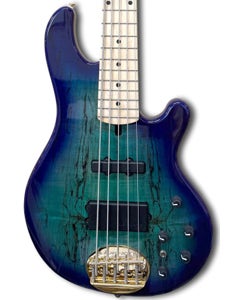
Lakland Skyline 55-02 Deluxe Spalt Top 5-String Bass Guitar Ocean Burst
Special Price $2,052.00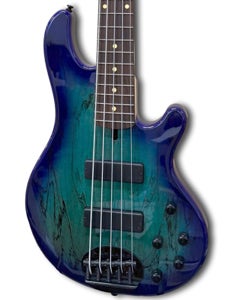
Lakland Skyline 55-01 Deluxe Spalt Top 5-String Bass Guitar Ocean Burst
Special Price $1,399.00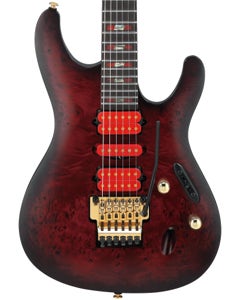
Ibanez Premium Limited Run S40THP Electric Guitar with Bag
Special Price $1,699.99