The mid-‘80s thrived on fearless experimentation with cutting-edge technology. Musicians ditched the rulebooks, grabbed synthesizer manuals, and crafted soundscapes with racks of digital gear. You can recognize it instantly with the cavernous reverb, punchy gated drums, the chorus-drenched, guitars layered over driving synth basslines and polysynth pads.
1986 was the year Bon Jovi's "Slippery When Wet" ruled the airwaves, Peter Gabriel's "Sledgehammer" shook MTV, and Run-DMC dramatically redefined the rock-and-rap landscape. It was also the year AMS began! But behind these culture-shifting hits was a specific arsenal of instruments and studio gear — from the rehearsal rooms of Sunset Strip to studios in New York and London. You had the shred-ready Jackson Soloist, the chimey, digital tones of the Yamaha DX7, the canny drum sound of your Simmons Drum kit, and plenty more. Let's get into the legendary gear that defined the identity of 1986.
What Guitars Were Artists Playing in 1986?
Jackson Soloist
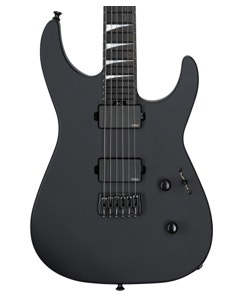
The Jackson Soloist was the go-to guitar for anyone playing hard rock and metal, shredding their way through the mid-'80s. With its through-neck construction, sharp headstock, and speed-focused body contours, it was tailored for blazingly fast players like Warren DeMartini and Marty Friedman. Even Jeff Beck took a liking to the Jackson soloist, in pink, right around the time he came out with his album “Flash.” Plus, it looked absolutely killer under stage lights and in 1986 — aesthetics were nearly as important as sound.
And if you want to shred like the '80s, you're in luck! Jackson still makes the Soloist, and you know right where you can pick one up...
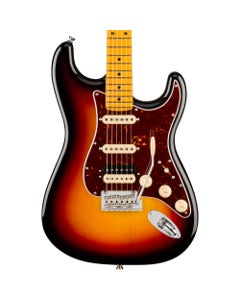
Fender Stratocaster and the Super Strat Revolution
The Stratocaster itself needed no introduction — it had been a mainstay since the ‘50s. But 1986 brought with it the "Super Strat" era, where players started dropping humbuckers into Strat bodies, adding locking tremolos, and swapping out necks to take their sound somewhere between traditional and oddly futuristic. This was a guitar that could deliver clean, country-tinged picking one moment and raging dive-bombs the next.
You can still find plenty of Super Strats from brands like Ibanez, Jackson, Schecter, and even Fender themselves. And of course the original Stratocaster is still one of the most popular guitars on the planet!
Fender Telecaster
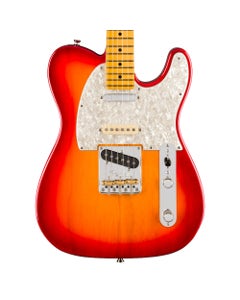
Not everyone was chasing the cutting edge sound. The Telecaster remained a staple for players who craved a traditional tone with some bite and clarity above all else. Bruce Springsteen and John Mellencamp were great examples of artists who never veered away from using the Tele. Its single-coil bite sliced through dense mixes with ease, making it a favorite in country, new wave, and alternative circles. During the ‘80s, the Tele was the anti-shred guitar and you could say that it wore that badge proudly.
And yes, the Fender Telecaster is still available and still doing the same amazing thing it was doing back in the '50s, '80s, and beyond.
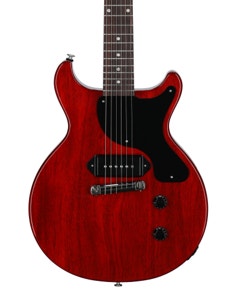
Gibson Les Paul Junior
The Gibson Les Paul Junior was the bare-bones choice for players who craved raw power over polished perfection. It’s no doubt that the Les Paul Junior was the underrated axe that never really got the attention it deserved. One P-90 pickup, a slab body, and absolutely no interest in being polished, you had no choice but to plug it in, turn up, and just play. Punk and alternative rock players gravitated toward it for exactly that reason: It's one of the most straightforward guitars you can have, and for very good reasons — and it's still around today!
Basses That Covered the Low End
Steinberger Bass
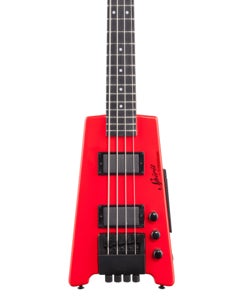
The Steinberger looked like it arrived from outer space. Made from composite materials with no headstock and a body barely bigger than a cutting board, it offered incredible tuning stability and sustain. Session players and touring musicians favored the tuning stability and the consistency of tone, even if the look took some getting used to.
Steinberger basses might not be as widespread as they were back in the '80s, but they're still around turning heads over 40 years later.
Fender Precision Bass
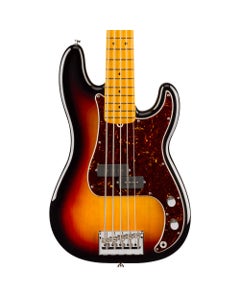
While the Steinberger was busy turning everyone towards the future, the Precision Bass was confidently rooted in the past, and nobody’s complaining about that. The P-Bass had been the backbone of bass playing since the ‘50s. It was considered a reliable bass that defined the low end of rock, soul, and pretty much everything else in between. Bassists kept returning to it for its signature warmth, punchy tone, and a legacy so deeply woven into music history that picking one up felt like connecting with something timeless.
Just like anything Fender makes, the P-Bass is still one of the best-selling basses used by pros and enthusiasts alike. Really its only rival in terms of popularity is the...
Fender Jazz Bass
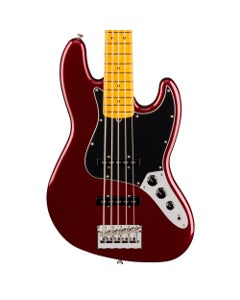
The Jazz Bass offered something different other basses, it offered a slimmer neck, a brighter tone, and a voice perfectly suited for funk, fusion, and the melodic bass lines weaving through mid-'80s pop and rock. Session musicians in Los Angeles and New York just couldn't get enough of it.
Naturally, it's still around today. Not only that, it's one of the most popular basses in the bizz! If you go to literally any concert — ranging from dinky open mic all the way up to the biggest stadium shows — there's a good chance a Jazz Bass will appear on stage at some point.
Music Man StingRay
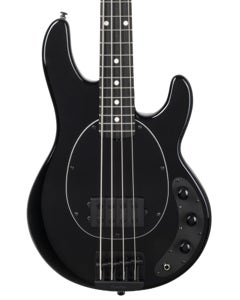
Designed by Leo Fender after he left the company he founded, the StingRay brought an active preamp and a thick, aggressive humbucker to the low end. Musicians wanted a type of sound that could cut through the dense layers of production that were heavily mixed in on records and the StingRay delivered it every time.
The legend of the StingRay didn't stay in the '80s, though. Today, you can find all sorts of StingRay bass models to suit any style.
What Keyboards and Synths Defined the '80s Sound?
Fairlight CMI
The Fairlight Computer Musical Instrument was the sound of ambition with a price tag to match. Used by artists including Peter Gabriel and Kate Bush, it was one of the first high-end samplers capable of reproducing authentic, real-world sounds with detailed accuracy. If a pop record couldn't afford an actual orchestra, there’s a solid chance that the Fairlight was involved.
Unfortunatley, they don't make the Fairlight CMI anymore. However, many modern synths from brands like Arturia and Korg feature plugins that can emulate the '80s-licious tones of the original.
Yamaha DX7
Few instruments changed the sound of a decade like the Yamaha DX7. Its FM synthesis engine produced electric pianos, bells, and bass patches that became so ubiquitous they practically are the 1980s. By 1986, the DX7 had shipped over 200,000 units worldwide, making it one of the best-selling synthesizers ever. If you heard a keyboard on the radio that year, chances are it was a DX7.
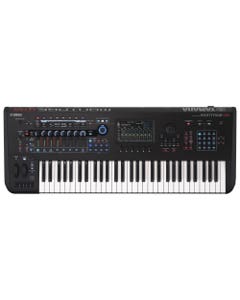
Although the DX7 is outdated by today's standards, Yamaha has continued to create game-changing synthesizers that only get better and better. Check out the Montage series if you really want a top-rate synth that can still produce those lovely '80s tones but with almost-literal mountains of modern features.
Roland Juno-106
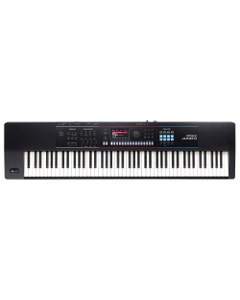
One of my favorite synths that I got a chance to play a few years ago was the Roland Juno-106. The Juno-106 brought a warm, lush sound, and was very easy to program. This was one of those synths that showed up in pretty much every genre. The built-in chorus effect, was thick as a wool coat and responsible for a huge portion of the pads you categorize as mid-'80s pop and electronic music.
The Roland Juno is still around, but the current model is like the great-great-great grandchild of the original. It's had just a few updates since the '80s...
Sequential Circuits Prophet-5
The Sequential Prophet-5 was already legendary by 1986, but it hadn't lost its appeal. Its polyphonic analog warmth sat beneath countless records as pads, strings, and atmospheric textures. Studio engineers knew it. Producers loved it. And when a Prophet-5 patch opened in a mix, everyone knew it.
Polyphonic, analog, and capable of sounds that felt genuinely alive, it appeared on records by artists including Michael Jackson, The Cars, and countless others. By 1986, it was slightly past its commercial peak — but in the hands of the right player, it was still without a doubt unmatched.
You can still buy a brand-new Prophet-5 to get authentic analog '80s sounds. However, Sequential has also added several new synth models to their lineup since then, giving you even more amazing analog options for every player.
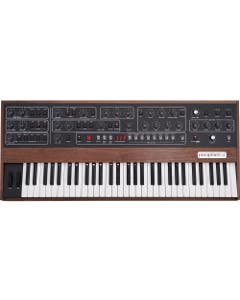
Sequential Prophet 5 Analog Synthesizer Keyboard
Special Price $3,699.99
The Rhythm of ’86
Yamaha 9000 Recording Custom Drums
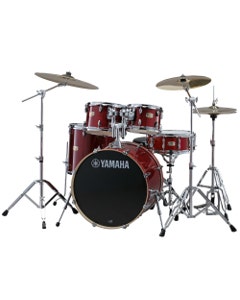
For bands that still wanted the real thing, the Yamaha 9000 Recording Custom set the professional standard. Precise, controlled, and studio-ready, it was a go-to for session drummers who needed consistent, reliable performance on every take.
Yamaha still makes some of the best drum kits in the land. Definitely check them out.
Roland TR-707 and TR-808
The TR-707 handled mainstream pop and rock, being tight, punchy, and easily programmable. The TR-808, meanwhile, was becoming the foundation of R&B, hip-hop, and electro music. Its bass drum was felt right in your chest. Run-DMC's "Peter Piper," released in 1986, showcased exactly what the 808 could do when used as a lead instrument rather than a background, time-keeping track. Even today, we all still continue to use the 808 for its unmistakable, iconic character.
While original 707 and 808s are still highly sought after, Roland has only improved their drum machines over time. The TR-1000 is the latest iteration of the legendary drum machine that packs both 707, 808, and 909 tones but with TONS of new features you won't find on vintage models.

Linn LM-1 Drum Machine
The Linn LM-1 predated much of the competition, but its influence carried deep into the mid-'80s. Prince used it extensively. Its sampled drum sounds — real recordings rather than synthesized tones which gave it a warm, woody tone that synthesis couldn't replicate. They only made 525 of them, so you could say they're kinda rare (expensive) in today's world. Luckily, there are tons of samplers out there that took inspiration from the LM-1 and use real drum recordings for their samples — or let you record your own.
What Effects and Studio Gear Defined the Sound of 1986?
Boss CE-2 Chorus

Simple, effective, and affordable, the Boss CE-2 Chorus gave guitars a shimmering, watery quality that became synonymous with '80s clean tones. Players like Andy Summers from The Police had already popularized chorus-drenched guitar earlier in the decade, and by 1986, the CE-2 was a standard on everyone’s pedalboards — and still is today!
Electro-Harmonix Electric Mistress
New wave flanging had a name, and that name was the Electric Mistress. Swooping, liquid, and wonderfully weird, the Electro-Harmonix Electric Mistress colored the guitar tones of post-punk and new wave with a really cool, signature character that no other flanger pedal could replicate. Listen to Adrian Belew on King Crimson’s “Three of a Perfect Pair” album and you’ll hear it immediately. And if you want to replicate that flangin' tone for yourself, you can still pick up a new Electric Mistress from your favorite online music retailer (which is definitely AMS).
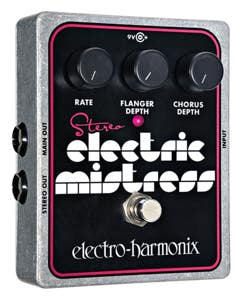
Electro-Harmonix Stereo Electric Mistress Flanger Chorus
Special Price $150.60
Eventide H3000

The Eventide H3000 transformed what pitch-shifting and harmonizing could do in a studio context. Producers used this rack effect to thicken vocals, create interesting harmonies, and add subtle detune effects that gave recordings size and dimension. It wasn't cheap, but the results spoke for themselves.
Eventide still makes some of the best pitch-shifting pedals on the market. The latest iteration, the Harmonizer H9 Gen2, is a portable powerhouse that can do everything the '80s models could and much, much, MUCH more.
Lexicon 224
Mention the reverb of the ‘80s to any producer and the Lexicon 224 will be brought up almost immediately. Its rich, expansive reverb tail shaped the sound of power ballads, stadium rock, and cinematic pop throughout the decade. This reverb effect gave the instruments space and made songs feel much larger than the rooms they were originally recorded in.
The Lexicon's reverb was so good that it's still used as a downloadable plugin for DAWs in recording studios all over the world.
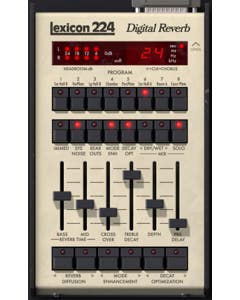
Universal Audio Lexicon 224 Digital Reverb Download
Special Price $39.00
The Legacy of 1986's Gear: Why It Still Matters Today
The instruments and effects that filled studios and stages in 1986 weren't just tools; they were the vocabulary of an era — each one contributing a phrase, a texture, or a rhythmic piece to a collective image that still resonates today.
The DX7's patches are licensed and sampled constantly. The Lexicon 224's reverb sound is emulated by plugins that sit on millions of producer laptops right now. Guitarists still hunt for vintage Strats. And the kick drum of the 808 never really left the club. Understanding the gear isn't just a reflection of nostalgia, it’s imperative to the continuation of modern music.
What 1986's gear demonstrates, more than anything, is that the right instrument at the right cultural moment doesn't just make music — it becomes integral to the human experience. That's a legacy worth saluting. And AMS is happy to be a part of that legacy started way back in 1986.