There seems to be this cycle modern guitarists fall into. They start on analog gear — or at least a “real” amp. Then they see someone with a modeler and think how convenient it would be to carry your entire rig in a backpack, so they swap to digital. Then they go back to analog for more warmth. Then they miss the convenience and versatility… See where this goes…?
I’ve been there. I started out on the Line 6 Spider III, as is tradition for newbie guitarists #insanemodeforlife. Eventually upgraded to a big-boy Fender Twin Reverb in all its 70lbs of glory. Then ditched the analog for a space- and ear-friendly Line 6 Helix Floor. And perhaps have now started to look toward the analog realm again… Point being, I’ve been around the block, and I figured I’d let you in on a few secrets about the amp modeling world that I wish I knew before I went digital.
If you’re an analog junkie thinking about diving into the world of limitless tones and backpack portability, here are seven things you should know before you get an amp modeler — from someone who has been down this road before.
Yes, the Amp Models Are Really Good
First things first: yes, the amp models are super good.
Modeling technology has come a LONG way over the years. The first modelers back in ‘80s and ‘90s were good for their time, but it was pretty obvious that the guitarist wasn’t using a real amp. It didn’t have the same feel and warmth of an analog amp — even compared to solid-state amps. And many players still have that mentality in 2026. Sorry, but you’re wrong.
Modern amp modelers are amazing. Really. The tone and even the feel of these models are so realistic that 99% of people can’t tell the difference. If you’re a super audiophile, maybe? But I definitely can’t. My Helix can even do edge-of-breakup stuff, where it’s super clean with soft picking and starts to break up with harder picking, just like a real tube amp. It’s crazy.
I can verify that the Fender Twin amp model in the Helix sounds just like my old amp (except I can actually turn it up past 2). The Friedmans sounds like Freidmans; the Mesas sound like Mesas; and the snozzberries taste like snozzberries. I’d say the only drawback of having so many realistic amp models to choose from is that you start looking at $4,000 tube amps because they sound so good on the modeler.
So if you’re dissuaded from getting a modeler just because “the tone isn’t authentic,” I’m not convinced that argument really holds up anymore. Digital modelers sound just as good as the real thing these days, and they’re only getting better!
Bonus points: Modelers sound good at any volume. You don’t have to blow your ears out to get that lovely tube saturation.
You Have UNLIMITED Tones
This is one of the things that really drove me to go digital. I loved the idea that I could have access to hundreds of amps, cabs, mics, and effects to build my tones, then put all those tones into hundreds more presets that I can click like a channel switch. After all, the two (maybe three) channels on a “real” amp is so limiting, right?
This turned out to be a double-edged sword, and it’s definitely something you should know about before getting an amp modeler.
Yes, you can create literally any tone imaginable. And it’s awesome to be able to jump from a clean jazzy tone to a crunchy blues tone to a high-gain metal chugging tone and all the way to a weird vibey shoegaze tone with the click of a button. But you can also create any tone. It gets overwhelming…
I’ve spent hours building a preset that I thought was perfect, only to ask myself, but what if I used this cab, or this amp. What if I swapped the microphone on the cab? What if I turned the drive down on the amp and put a tube screamer in front? What if I swapped the tube screamer for a Klon — or one of the other dozen overdrives? The tweaking never ends. Option paralysis is real when it comes to modelers.
If you like diving into every tiny, subtle nuance of your tone — and building lots of them — a modeler is awesome. If you’re easily overwhelmed by choice, I’m not saying you shouldn’t go with a modeler, but it’s definitely something to consider. I’ve often thought about going back to a “real” amp just to be stuck to the two channels and five knobs and working with what I have. But I haven’t done it yet, so I guess that says something…
Speakers Matter
One of the biggest (and most frustrating) lessons I learned with a modeler is that speakers ABSOLUTELY matter. And no, I don’t mean the cab IR (although, pro tip, that matters a lot more than you might think).
A modeler will sound different through different speakers. You can build a tone using headphones, and it’ll sound different through the PA. If you set it on the PA, it’ll sound different on your studio monitors. And then if you go jam with a friend and plug into their PA, it sounds different yet!
This is where “real” amps shine. They use the same speakers all the time, so they’re going to sound the same in your practice room as they do at the gig as they do at your friend’s jam session, no matter what.
Now, the actual difference between speakers will vary — and you can get the tone pretty close if you use good gear. For example, I used to use Bose QuietComfort headphones with my Helix. They’re not studio headphones by any stretch, but I figured they were nice and clear listening to music, so they must be nice and clear through the Helix, right? NOPE.
Plugged in, they got some crazy mid- and bass-heavy EQ bump that made everything super muddy. So when I built my presets, I went way back on the low mids and bass. Shocker, it sounded horrible through my PA. I finally got some real studio headphones (Beyerdynamic DT 770 PRO X to be exact), and now the tones I build using the headphones sound nearly identical to what comes out of the PA. Again, there’s some slight variance, but it’s much better if you actually use quality gear.
More than Just Guitars
They're usually referred to as "guitar amp modelers," but they work for a lot more than just guitars. You can plug basically anything into them!
The most obvious example is bass. Almost every modeler has at least a few bass amps, cabs, and effects for you to play with. That means you can get the tone of a 6x10 bass cab without needing to lug a refrigerator around with you. Some modelers, like the Darkglass Anagram, are specifically for bass, bringing more low-end power to your modeling rig.
But the fun doesn't stop there. Many of the higher-end modelers have both 1/4" and XLR inputs — sometimes even a few. If it has a cable, you can run it through the modeler. Ever wondered what a synth sounds like if you play it through a Marshall stack? Well, you can find out! Think of all the effects and tweaks you can do to vocals in the studio without needing dozens of plugins burning up your computer... And yes, many modelers have phantom power, allowing you to run condensers, too!
I liked to run my Teenage Engineering KOII through the Aux input on my Helix. I could build a beat and jam along to it, kinda like a metronome with personality.
It Can Replace A LOT of Gear
You might think going with a modeler will just save you some space in your practice room where your amp sat. But really, it can replace a lot more than that. In the studio and on the stage, modelers can go even further. Here’s all the gear you can replace with a modeler:
- Audio interface
- Vocal processor
- Looper
- MIDI DAW controller
- Live sound mixer
Of course, this depends on which modeler you choose. But the big three that I’ve used (Helix, Headrush, and Neural DSP) can do most, if not all, of these functions. I like being able to run my guitar and mic through the Helix at the same time. That way, I can dial my vocals and set levels in my practice room, knowing they’ll be good when I play a gig.
Plays Nice with “Real” Equipment
Are you a only modeler-curious? Don’t want to entirely commit to going digital? That’s okay, because modelers play nice with “real” equipment, too.
Many high-end modelers come with effects loops, so you can route real pedals into your digital signal chains. You can also omit the actual amp model in your signal chain, load it up with effects, and run it out to a real amp to get the power of the digital effects and the warmth and feel of a real amp. I’ve even heard of people using just the power amp section of an amp model to drive their real tube amp in unique ways.
Even if you don’t want to go fully digital, having an amp modeler can help you create some truly unique tones. We even caught analog purist Mark Tremonti with a Quad Cortex in his effects rack, working right alongside his tube amps.
My Favorite Amp Modelers
There are tons of different amp modelers out there, and they all have their strengths and weaknesses. I’ll only speak from my own personal experience, but these are my favorite amp modelers on the market right now if you’re thinking about getting into the digital world:
Line 6 Helix
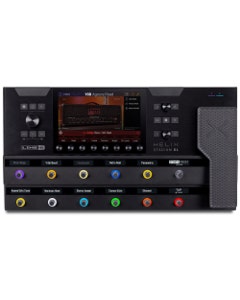
The Line 6 Helix is my favorite amp modeler right now. I personally use the “old” floorboard model, but the updated Stadium models sound and look absolutely incredible — I might be due for an upgrade soon…
First, it sounds amazing. The amp models are dead on and sound great for what I need. But what I like most about the Helix is its tweakability. You can really get in the weeds editing every tiny, minute aspect of your tone, from the drive of the amp to the position of the cab mic. I’ve spent hours turning knobs and tweaking tones. The desktop editor is really nice too, if you don’t feel like bending over to turn the physical knobs — which I also prefer over all-touch displays.
Bonus points: Some Helix models come with an onboard expression pedal.
Neural DSP Quad Cortex
The Quad Cortex has stood at the top of amp modeling mountain for years — and for good reason. It sounds absolutely amazing!
But where Neural DSP products really shine is with their presets. If you get option paralysis and don’t want to learn what Presence and Deep mean when tweaking amp tones, all you have to do is load up a preset from one of your favorite artists and boom, you have studio- and tour-ready tone that’s good to go in just a few clicks. The workflow makes it super easy to build great tones in no time. You can also clone your real rig and turn it into a preset!
If you like volume swells, wahs, and whammys, just remember that the Quad Cortex doesn’t have an onboard expression pedal. You’ll have to get one separately.

Headrush Prime
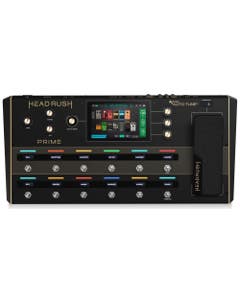
Headrush Prime Guitar Multi FX Amp Modeler and Vocal Processor
Special Price $999.00
I’m starting to feel like a broken record, because Headrush products all sound really good, too! Their models are super realistic, the workflow is easy to navigate, and they’re a solid option for anyone who wants tour- and studio-ready tones in one little box. One of my old bandmates used a Headrush modeler for years (and still does), and he always sounded amazing.
While Headrush certainly doesn’t skimp on guitar tones, they really pull ahead of other amp modelers with their vocal processing. For example, the Headrush Prime comes with a full suite of studio-grade vocal FX, including Antares AutoTune. You know, the one T-Pain uses. Headrush’s vocal processing is so good that they even offer a standalone vocal processor.
Headrush also just rolled out an update that lets you add drum tracks to your loops, making solo jams much, much better!
IK Multimedia TONEX ONE
The IK Multimedia TONEX ONE was my introduction into the world of amp modeling. And unlike most “beginner” gear you start with, I would definitely recommend it — for even experienced players.
I wouldn’t say the tones are entirely as good as some of the other modelers on this list, but they’re still very good. I played a few gigs with mine — not that I’m selling out stadiums and recording gold records, but it worked!
What I really loved about the TONEX ONE, and why it’s on this list, is the size. It’s tiny; smaller than an actual effects pedal! I set it to have two channels, a clean and a lead, click the footswitch to change channels, and you’re good to go. Plus it has built-in EQ, reverb, compressor, and gate controls to make adjustments on the fly.

I only had a few little gripes with the TONEX ONE. First being that the desktop editor was a bit confusing to load up your presets — although they fixed that with the TONEX ONE PLUS, giving you Bluetooth editing abilities from your phone. My second gripe was that it was a little hard to understand the on-pedal controls. Click and hold for this, wait for the light to blink for that, it should be this color for those… I had some trouble keeping it straight, but I’m sure it’s intuitive for someone who can actually remember… well… anything.
The TONEX ONE is an amazing amp modeling option for anyone who wants something they can throw in their gig bag and be ready for anything. The cloning ability also makes it a fantastic backup! Plus, it's really hard to argue with the size and price.
To Model or Not, the Choice Is Yours
I won’t say a modeler is right for everyone, but I will say that it has been a great move for me. I love the versatility and portability, making it easy to carry literally dozens of different rigs in a backpack — many of which I can’t even afford in my dreams. Plus, the tones are incredible!
Ready to go digital? There are tons of amp modeling effects to play with right here at American Musical Supply. Try one out and see if it’s right for you. Just don’t get too lost tweaking your presets…